

The Places We Leave Behind
The friction we cannot afford to eliminate.

We rarely think about the places we inhabit as forces that shape who we become.
We assume our homes, workplaces, neighborhoods, classrooms, and communities are simply the backdrop to our lives. In reality, they quietly influence our habits, relationships, memories, and sense of belonging.
One reason is that we’ve been taught to see friction as the enemy.
Faster is better. Easier is smarter. Smoother is progress.
We build technology, systems, and lives designed to remove every obstacle between point A and point B. Yet the things that make us most deeply human—growth, memory, character, belonging—are built precisely through the kinds of productive friction we’ve spent decades trying to eliminate.
Every place we create leaves an imprint on the people who inhabit it. And every place we leave behind becomes part of the legacy we carry forward.
Once I saw this, I couldn’t stop seeing it.
It changed how I think about the rooms that raised us.
The rituals that formed us.
The workplaces we shaped—and that quietly shaped us in return.
Because the places we leave behind are never just places.
They become part of the people who remain.
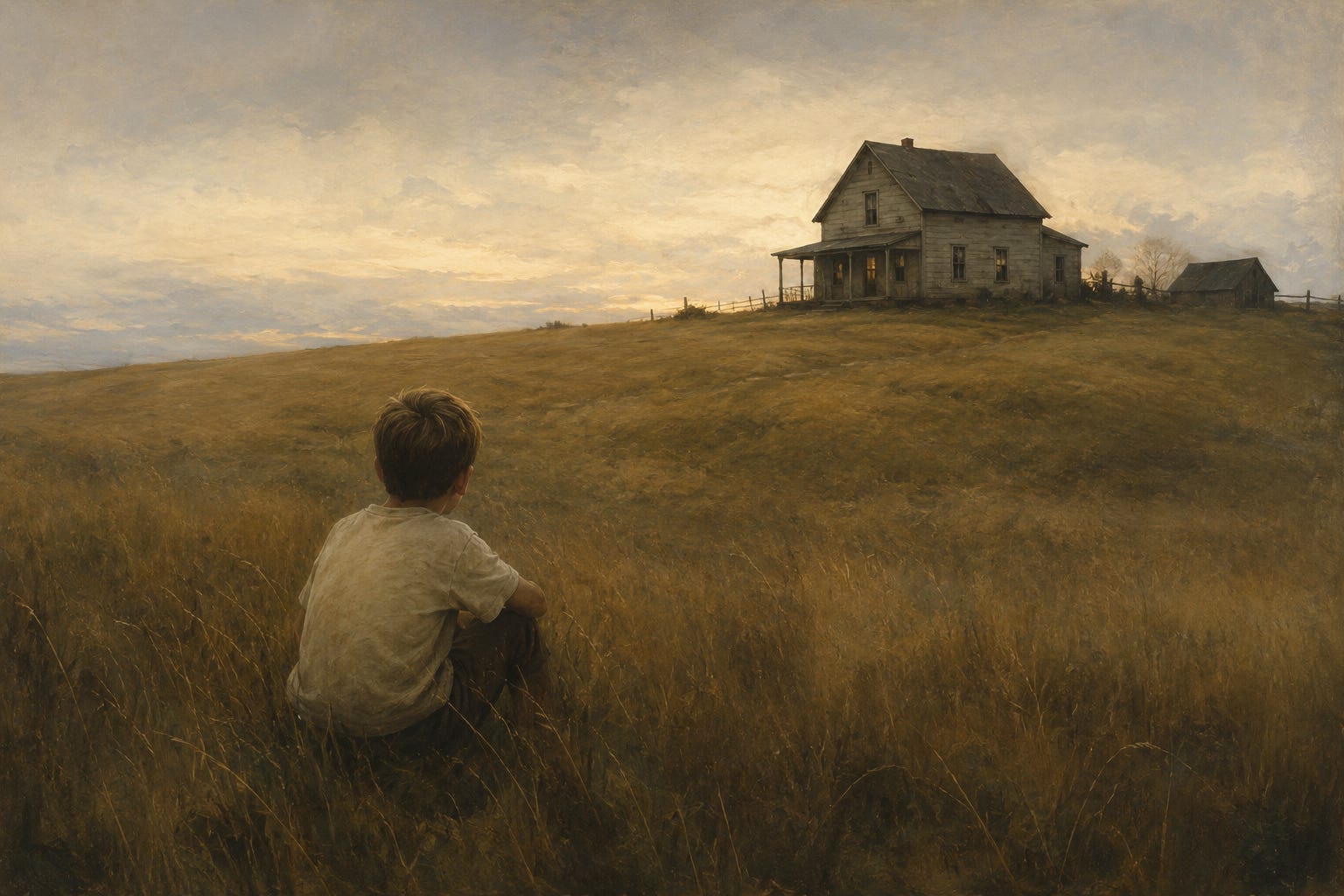
We Are Builders by Nature
Like beavers, humans are natural builders. The difference is that we build with intention.
More importantly, the structures we create become the structures that create us.
Every room we arrange.
Every garden we plant.
Every gathering place we nurture.
Every corner we reclaim.
Each one quietly shapes the habits we practice, the relationships we cultivate, and the people we become.
When we rearrange a room, carve out a space for reflection, tend a garden, or build something alongside others, we are doing far more than changing our surroundings. We are strengthening our sense of agency, developing competence through action, creating shared memories, and reinforcing the identities of the people who live, work, and gather there.
This is why place matters so profoundly. The environments we inhabit are never neutral. They invite certain behaviors, discourage others, and quietly teach us what to value. Over time, they become invisible partners in shaping our character, our relationships, and our sense of belonging.
Every environment is designed. The only question is who—or what—is doing the designing. The relationship between people and place isn't one-directional. It's reciprocal.
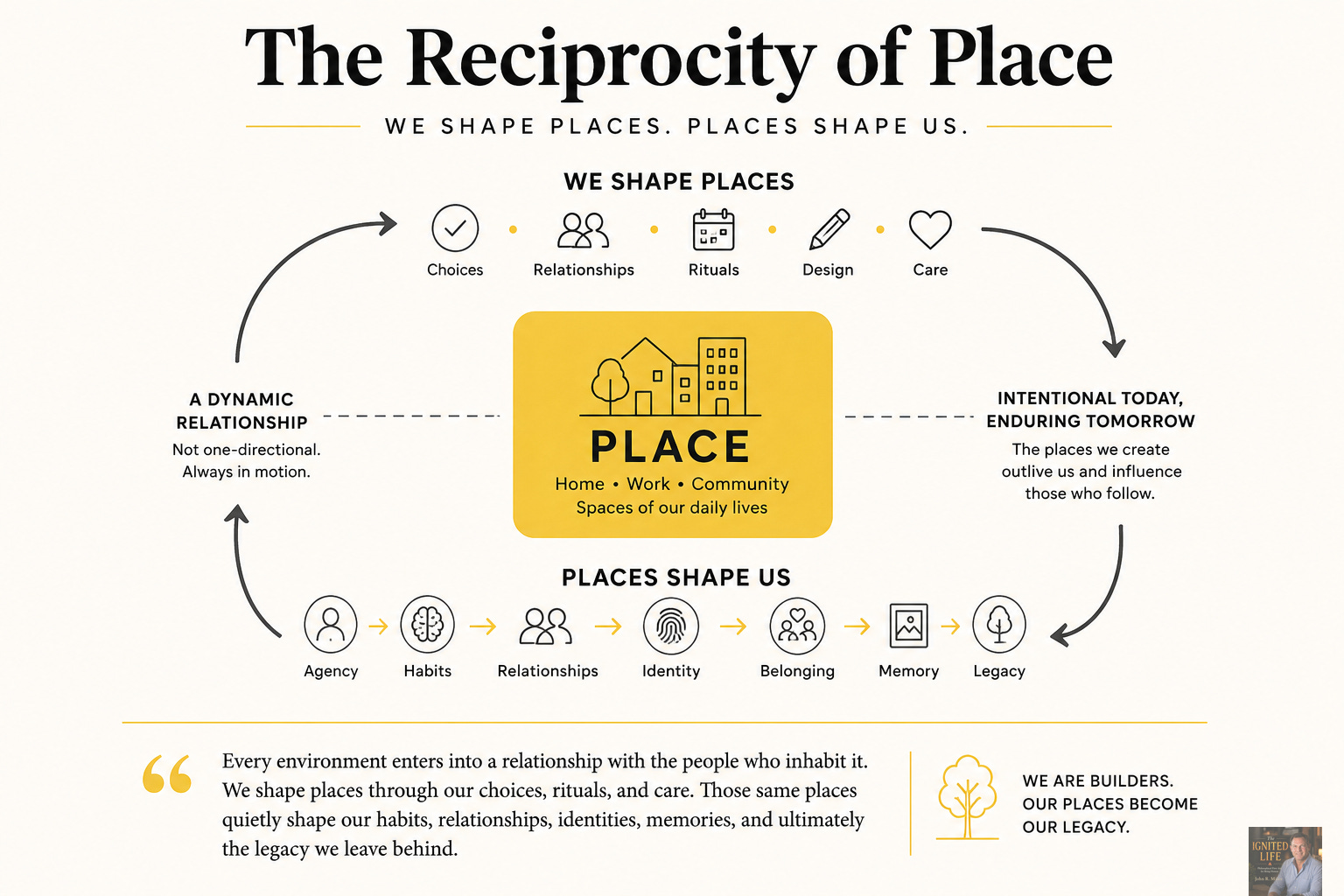
If we fail to shape the places around us with intention, they will still shape us. The architecture of our homes, the culture of our workplaces, the design of our neighborhoods, and even the digital spaces that compete for our attention become silent authors of our daily lives.
The places we build are never merely places. They become repositories of memory, belonging, and identity. Long after we leave them behind, they continue to influence the people who remain—including ourselves.
Memory Lives in Place
Certain places have the power to bring people back to us.
My grandfather’s back porch in Glenview, Illinois, still carries the memory of pork chops sizzling on his beloved Weber grill. One familiar smell, one crackle of charcoal, and he is there again—not as an idea, but as a living presence. The stories return. The laughter. The quiet lessons he never realized he was teaching.
For someone else, it might be a grandmother’s screened porch, a favorite fishing dock, or the worn wooden steps of a childhood home.
Why do we find ourselves returning to these places, even decades later? Because memory isn’t stored like files in a cabinet. It is woven into the sensory fabric of place. The angle of afternoon light across a kitchen table. The creak of an old staircase. The scent of rain on familiar soil. The sounds, textures, and rhythms of a place become part of how we remember the people who once filled it.
Places don’t simply preserve memory. They become part of it.
This is why a familiar scent or a worn porch step can transport us more completely than a photograph ever could. Memory is relational. It doesn’t exist only inside our minds; it lives in the environments that shaped our experiences.
That realization changes how we think about the places we create today. The dinner table where difficult conversations unfold. The garden where grandchildren learn to dig in the soil. The walking trail where friendships deepen one conversation at a time. These aren’t just settings for our lives. They become part of the memories future generations will carry long after we’re gone.
The places we build today become the places that remember us tomorrow.
The Silent Curriculum of Place
Every place is teaching us something.
Our environments are never neutral. Every room, building, neighborhood, and workplace carries an unwritten curriculum that shapes how we think, behave, and relate to one another. The question isn’t whether your surroundings are influencing you. It’s whether you’ve ever stopped to consider what they’re teaching.
Long before we consciously choose our habits, our environments quietly encourage some behaviors while discouraging others. They reward attention in one direction and make other choices less likely. Over time, these small signals become culture. Culture becomes habit. Habit becomes character.
Our surroundings constantly communicate our values—whether we intend them to or not.
A workplace where leaders remain physically separated from their teams teaches hierarchy more powerfully than any mission statement. A home designed for convenience, not for conversation, quietly communicates what matters most. A neighborhood without sidewalks or playgrounds reveals something about how a community values connection, movement, and childhood.
People don’t simply inhabit environments. Environments inhabit people.
When environmental designer Leidy Klotz joined me on the Passion Struck podcast, we explored this very idea. He described our environments as "advertising our values"—messages that never turn off. A company's mission statement may celebrate openness, but if executives work behind locked doors while everyone else remains outside, the building teaches a different lesson every day. The same is true in our homes and communities. Long before we articulate our values, our environments have already begun demonstrating them.
This is the silent curriculum of place.
It operates every hour of every day. Through repetition rather than instruction, it teaches us what to notice, what to value, how to relate to one another, and ultimately, who we are becoming. The greatest lessons in our lives are often the ones no one consciously set out to teach.
Which raises an important question: If your environment has been educating you all along, what kind of graduate is it producing?
Space Before Screen
Recognizing this silent curriculum changed one small habit that now shapes every morning.
Before I reach for my phone, I pause.
I notice the quality of the light coming through the window. The temperature of the room. The sounds outside. The quiet rhythm of the space around me.
It’s a simple act, but it reminds me that my attention belongs somewhere before it belongs everywhere.
Only then do I enter the digital world.
For a few moments each morning, my environment teaches me presence before my devices teach me urgency. It’s a small ritual, but it reorients me to the place I’m actually living instead of the endless stream competing for my attention.
The first environment we enter each day quietly shapes the mindset we carry into everything that follows.
Leaving a Good Place
We often think of legacy as something we leave in people. Perhaps it is just as much something we leave in places.
The porch where grandchildren still gather. The dining room table that held difficult conversations and contagious laughter. The neighborhood trail that taught children to wander with curiosity. The office where people felt safe enough to tell the truth.
Long after we’re gone... these places continue their quiet work.
Long after we’re gone, these places continue their quiet work.
They welcome.
They remember.
They teach.
Every place we shape carries forward a way of living. It preserves not only what happened there, but what mattered there. The values we practiced become the culture others inherit. The rituals we repeated become traditions that someone else continues. In that sense, places become living expressions of our character long after our voices have faded.

This is what it means to leave a good place behind. Not perfection. Not permanence. But an environment that continues to cultivate belonging, curiosity, courage, and connection after we're no longer there to tend it.
You don’t have to redesign your life this week. You only have to begin noticing it.
You don’t have to build an entirely new world. You only have to begin participating in the one you’re already creating.
Move one chair to invite conversation. Clear one corner for reflection. Plant something that will outlive this season. Share one meal without distraction. Build something with someone you love.
Small acts of stewardship become the places where lasting memories take root.
The places that shaped you were never merely backdrops to your life. They were among your greatest teachers.
Now it’s your turn to become one. Because every time we shape a place...the place quietly shapes us back.
And one day, someone else may inherit not only the space we created, but the life it quietly taught them to live.
What place has shaped you most deeply?
What kind of place are you leaving behind?
These reflections grew out of my recent conversation with Leidy Klotz, author of In a Good Place. If you’d like to explore the ideas more deeply, you can listen to the full conversation here.
Download the free companion reflection guide
Grab a copy of Leidy Klotz’s new book, In a Good Place.
© John R. Miles 2026. All rights reserved.