

The Mattering Mirror
How we protect the next generation from a culture engineered to make them invisible


If you were to look into a mirror right now that didn’t show your face, but showed your true value, what would you see?
For most of us, the reflection is gone. In its place is a scorecard. A digital, relentless, and unforgiving checklist of everything we did right today and a mounting, suffocating pile of everything we did wrong.
We have become world-class experts at polishing what I call Achievement Armor—that gleaming exterior of titles, Ivy League appointments, bestseller lists, and Fortune 50 boardrooms—while the person inside slowly disappears.
In a recent discussion with Laurie Santos—host of The Happiness Lab and the Yale professor behind the most popular course in the university’s 300-year history—she described a phenomenon she sees again and again among her students: “Duck Syndrome.”
It’s the perfect metaphor for Achievement Armor.
From the shore, a duck glides across the water—serene, composed, effortlessly in control. But beneath the surface, its feet churn frantically just to stay afloat. That hidden frenzy is the cost of appearing unshakable.
We have become a society of ducks.
We present a surface-level “glimmer” of success, while underwater, we are exhausted, terrified, and fueled by the fear that if we stop paddling for even a second, we will sink.
Achievement Armor doesn’t protect us from drowning. It hides it. And that is why this moment matters.
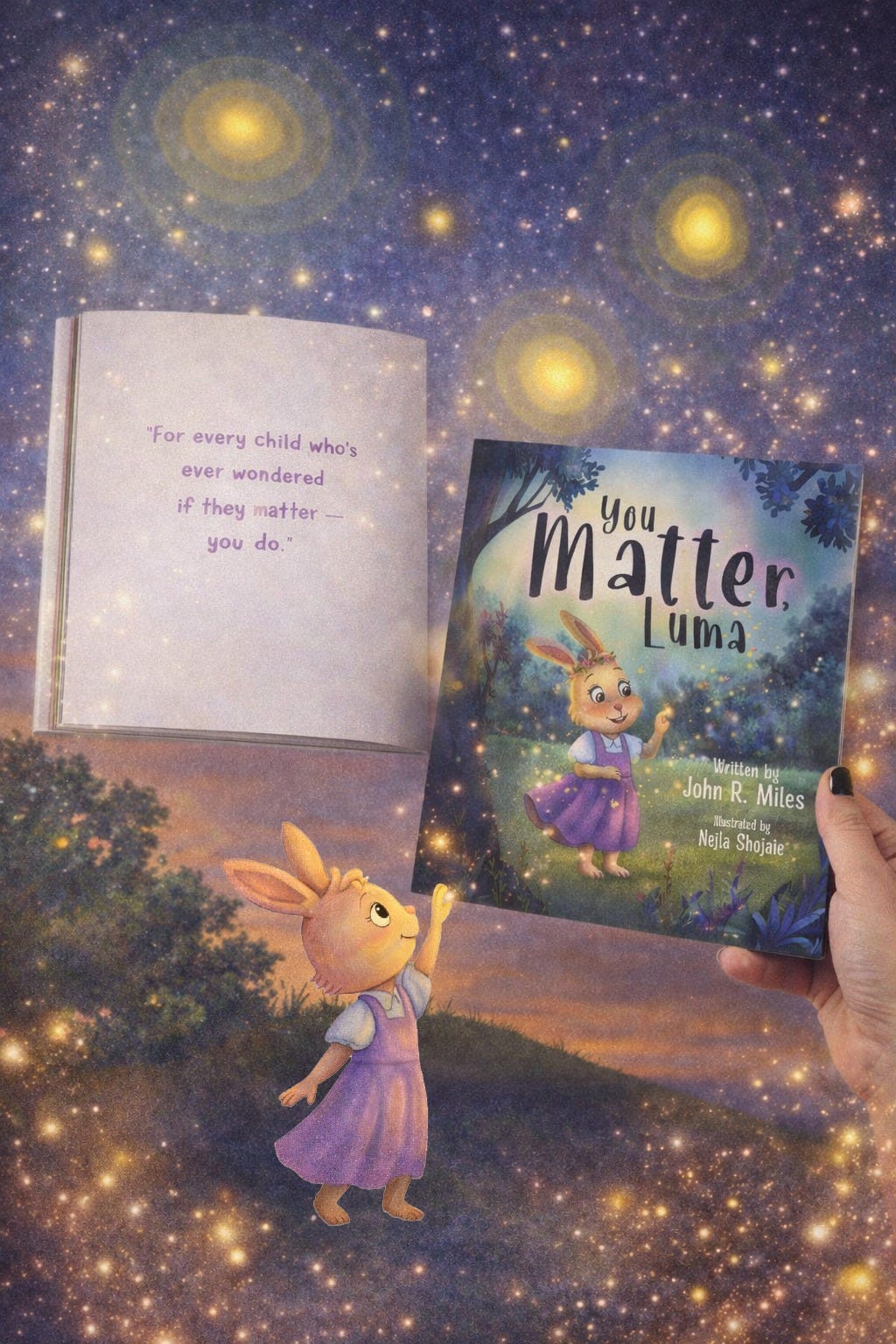
We are four days away from the launch of You Matter, Luma.
Over the past month, we’ve built this foundation alongside some of the greatest minds alive: Barry Schwartz exposing the Optimization Trap that keeps us chasing more… Daniel Coyle revealing the quiet art of truly flourishing… Harry Reis unpacking the science of deep connection.
We’ve explored the “mattering instinct” with Rebecca Newberger Goldstein, the chemistry of happiness with Sonja Lyubomirsky, and how evolution wires us for belonging through Paul Eastwick.
We’ve named the "Speech Impediment of the Soul"—that learned silence where authentic voice gets traded for a performance script. And we’ve defined the “Luma Effect,” planting intrinsic worth in the wet cement of childhood before the world etches its conditions in forever.
In other words, we’ve examined the architecture of a life that actually matters.
This week, the conversation moved from the abstract to the courtroom. And suddenly, the cost of wearing Achievement Armor was no longer theoretical.
It was on trial.
The Physics of Invisibility: A “Big Tobacco” Moment
On February 18, 2026, we witnessed what many are calling the “Big Tobacco” moment for the tech industry.
Mark Zuckerberg stood in a Los Angeles Superior Court to testify in a landmark trial regarding the harms of social media on our children. The testimony was a sobering revelation of how the “Optimization Trap” is being weaponized against the next generation.
Internal documents showed that Meta knew millions of users on its platforms were under thirteen—an “open secret” within the company—yet the accounts were preserved to meet engagement targets.
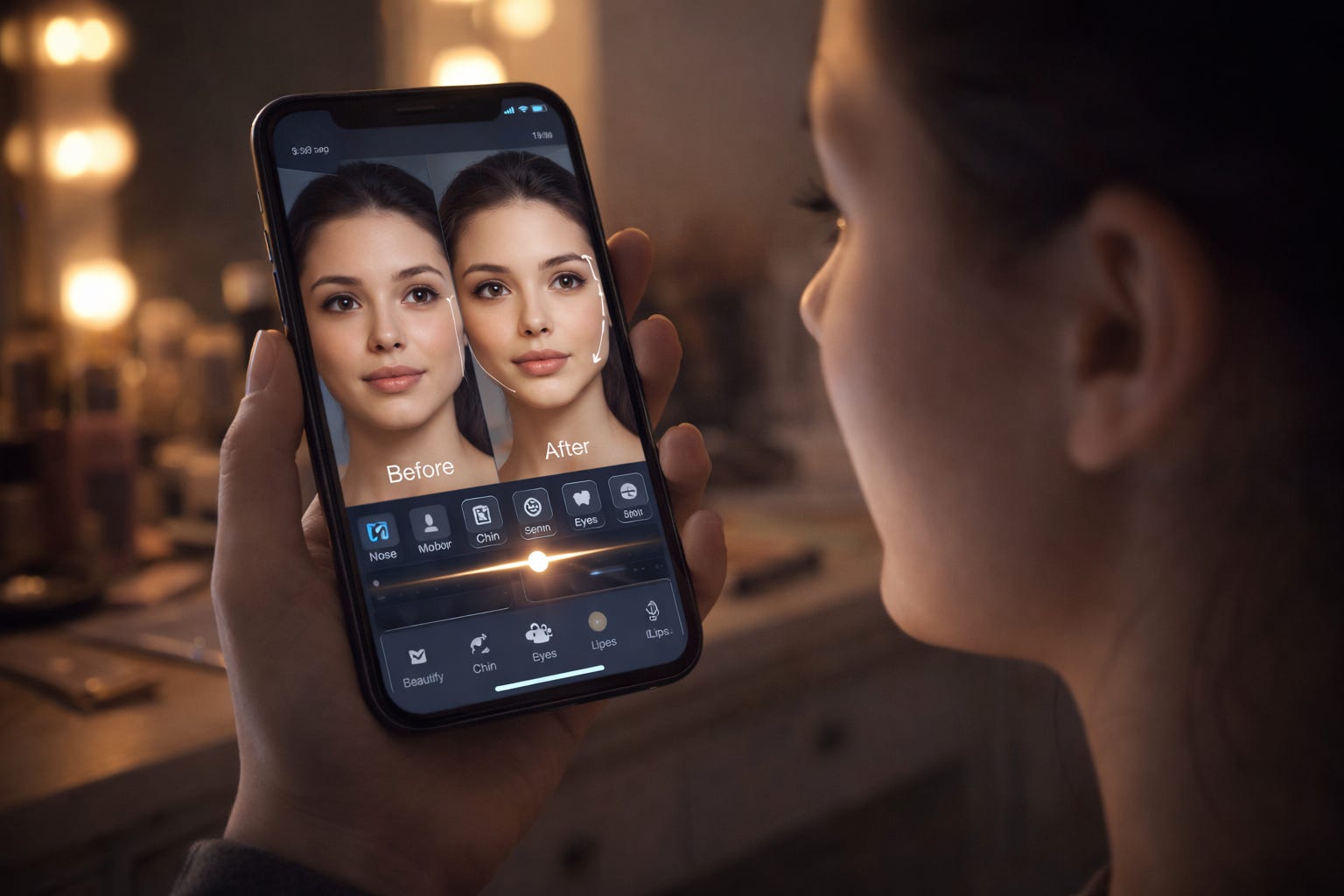
More chillingly, Zuckerberg was pressed on why Meta allowed “cosmetic surgery filters” to remain active despite warnings from eighteen experts that they caused direct, measurable harm to teenage girls.
His defense? He wanted to “err on the side of free expression.”
Let’s be brutally honest.
When an algorithm hands a nine-year-old a digital filter suggesting her natural face needs a surgeon’s touch to be beautiful, that isn’t free expression.
It’s a Shattered Mirror.
It is a system built to ensure our children never feel like they “register” unless they are performing for a metric. The trial revealed internal goals to increase average user engagement to forty-six minutes per day by 2026.
Forty-six minutes.
Those minutes are not neutral. They are not benign. They are not “just screen time.”
They are the currency of our children’s self-worth—converted into revenue.
And this is where the danger deepens.
Because the system doesn’t just sell attention. It manufactures Duck Syndrome.
We are training children to glide across a filtered surface—curated, perfected, optimized—while underneath they paddle in panic, convinced their unedited selves are inadequate.
The algorithm doesn’t just distort faces.
It distorts worth.
And when worth becomes conditional on performance, invisibility becomes the default state.
Micro-Harms and the Dehumanization of Connection
This cultural crisis is the macro-result of what Alison Wood Brooks, PhD from Harvard Business School calls micro-harms. As she and I discussed, mattering—or the lack of it—happens in the “micro-choices” of our daily conversations.
A micro-harm isn’t always a screaming match or a massive betrayal.
Often, it’s the subtle, split-second decision to glance at your phone while your partner is talking. It’s the failure to ask a follow-up question when an employee shares a win. It’s the “dehumanization” that happens when we treat a conversation as a transaction rather than an encounter.
And here’s the dangerous leap.
When a global platform is designed to prioritize “milestones” over well-being, it is a micro-harm at a global scale.
The signal is subtle but relentless: “You don’t fully register. You are engagement. You are retention. You are a data point, not a soul.”
And signals, repeated often enough, become beliefs.
Over time, those tiny fractures accumulate. The mirror doesn’t crack all at once. It splinters slowly—until one day we look around and feel invisible not just online, but in our own homes.
The Mechanics of the Mattering Mirror
To move from Performance to Presence, we need to decommission the cultural scorecard and adopt a new operating system.
A mirror doesn’t generate light. It does not compete with what stands before it. It simply reflects it without distorting it.
To become a Mattering Mirror is to do the same.
Drawing from thousands of real-world interactions, Brooks outlines what she calls the TALK framework—a practical blueprint for engineering connection in micro-moments.
Connection isn’t accidental. It is built.
T — Topics: Being intentional about what we choose to discuss.Moving beyond logistics and status updates into meaning.
A — Asking: Moving from shallow echoes to questions that deepen. Curiosity over commentary.
L — Levity: Infusing warmth and humor to keep the energy alive.
K — Kindness: Using receptive, non-judgmental language that signals psychological safety.
The most potent tool in this kit is Responsiveness. Specifically, the follow-up question.
Follow-up questions are the antidote to micro-harms. They interrupt invisibility. They communicate something primal and powerful:
Your inner world matters to me.
And in a culture obsessed with performance metrics, that simple act becomes revolutionary.
The Daily Practice: Three Rituals of Rebellion
To turn these mechanics into muscle memory, I am inviting you to join me in three daily drills.
These are the “physics” of the Luma Effect—the early truth that we possess intrinsic worth before the world scripts its conditions.
I. The Boardroom Callback (Leadership as “Matter-ment”)
We are trained to be scorekeepers—tracking KPIs, quarterly targets, and deliverables.
But real leadership is “matter-ment.”
The Drill: In your next one-on-one, resist opening with the status report.
Instead, use a Callback.
Reference a detail someone shared weeks ago: “I’ve been thinking about your point on the risk of this project—how is that sitting with you now?”
Proving their words stayed in your mind is a high-level micro-kindness that builds psychological safety and belonging.
II. The Bedroom Reset (Self-Re-Parenting)
The morning mirror is often the most distorted mirror of all.
Digital filters whispering “not enough.” The inner critic keeps the score
To heal the “speech impediment of the soul,” you must stop committing micro-harms against yourself.
The Drill: Stand in front of a real mirror.
Look past the Achievement Armor.
And say aloud: “The trade is over. I am done earning a seat at my own table. I matter—simply because I am here.”
When the inner critic interrupts, practice disidentification:
“That is a thought. It is not my worth.”
Presence begins when performance ends.
III. The Schoolyard Anchor (Planting the Ripple)
Between ages four and eight, identity is wet cement.
If we do not become the primary mirror for our children, the algorithm will.
And its reflection is a scorecard they can never win.
The Drill: Tonight, give your child—or your inner child—wordless presence.
No phones, no rushing to lights out. No Multitasking.
Ask one follow-up: “What made your spark feel steady today?”
Then anchor them in unconditional worth:
“I love seeing you win, but even if you never did another thing, you’d still be my greatest spark. I’m so glad you exist.”
Because the most powerful protection against a Shattered Mirror is a steady one at home.
The Stewardship of a Movement
The reason I wrote You Matter, Luma—and the reason I’ve brought you this high-powered lineup of thinkers—is simple:
One early truth can become preventative medicine for the soul.
If a child learns—before the scorecard arrives—that their worth is intrinsic, not earned, they carry an armor the algorithm cannot penetrate.
That is stewardship.
Stewardship means recognizing that your ripple does not end with you.
When you read this story to a child…When you use a Callback with a colleague… When you ask one more follow-up question instead of checking your phone…
You are becoming a mirror in a world obsessed with metrics. You are interrupting invisibility. You are creating a legacy of belonging that outlives you.
On February 24th, we launch You Matter, Luma.
Your Final Mission:
Pre-order the book: Head to youmatterluma.com to join the movement. Every copy is a signal flare that mattering is our new priority.
Start the Ripple: Visit passtheripple.com and mark your first micro-kindness on our global map. Watch how one reflection can light up a heart halfway across the world.
Tune In: Subscribe for Tuesday’s masterclass with Gordon Flett, one of the leading experts in the world on the science of mattering. He will show us why the “perfectionism epidemic” is actually a mattering crisis in disguise—and how we break it for good.
Because movements do not begin with algorithms. They begin with mirrors. And the next reflection is yours.
Listen to the conversation
Download the FREE Companion Digital Workbook by clicking on this link.