

The Mattering Instinct
The Breakthrough and the Cost of the Longing to Matter

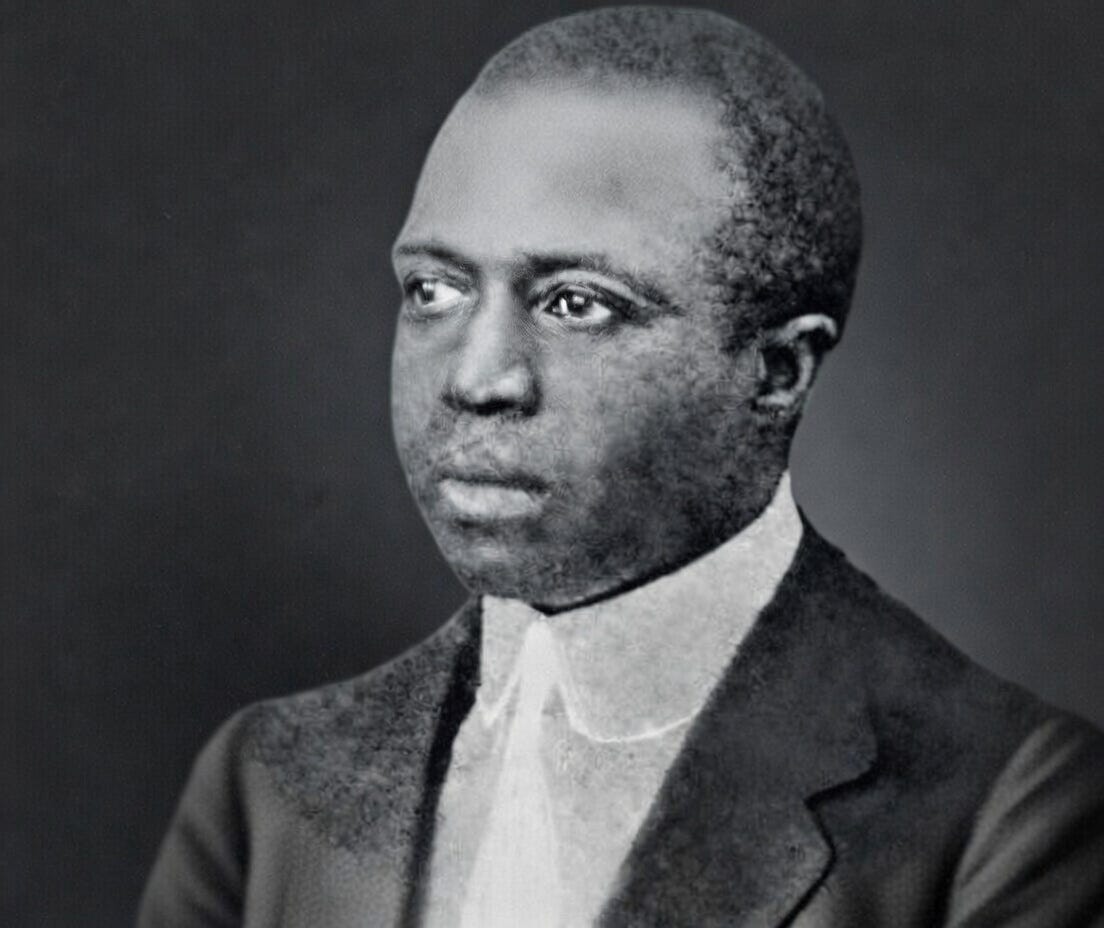
Scott Joplin, the king of ragtime, poured years of his life into Treemonisha, an opera he believed would establish him as a serious composer beyond popular tunes. He wrote the music and the libretto, funded productions himself when no one else would, and rehearsed it relentlessly. The work aimed to uplift Black communities through education and a female hero who led her people toward freedom.
Yet it was largely ignored during his lifetime. He staged a final, desperate concert read-through in Harlem with only himself on piano, his fingers already failing him. Critics dismissed it, audiences stayed away, and funding dried up. Joplin’s insistence on its value became all-consuming. The rejection contributed to his mental breakdown and early death at 48 from syphilis-related dementia. His mattering project, creating something enduring that would justify his existence beyond ragtime fame, ended in personal tragedy.
Now pause for a second.
Where in your own life have you poured energy into something you were sure would finally make you feel “enough”?
A project, a role, a relationship, a goal that you kept pushing even when the world didn’t respond the way you needed it to?
See if you can feel the quiet ache Joplin must have carried; the insistence that this one thing would settle the question once and for all.
Defining the mattering instinct
This is one of the stories Rebecca Newberger Goldstein tells in her new book The Mattering Instinct: How Our Deepest Longing Drives Us and Divides Us.
She describes the mattering instinct as the human need to justify why we deserve the constant attention we give ourselves. We resist entropy—the universe’s tendency toward disorder—through biology, but humans alone reflect on our self-focus and seek proof that it is warranted.
In our conversation this week on Passion Struck, Goldstein explained how this instinct drives “mattering projects”—the pursuits we use to affirm our significance. Joplin’s was heroic striving: standards of artistic excellence that would redeem his life in his own eyes. When the world did not respond, the project turned inward and destructive.
Think about your own mattering project right now.
What are you currently investing in to quiet that inner question?
A career climb?
A relationship you keep trying to fix?
A creative work you hope will finally be seen?
A role you play for others?
Notice how much energy you give it and how much peace depends on it being recognized.
The Mercy in The Mattering Instinct
Goldstein argues this longing explains both our greatest creations and our deepest divisions. When mattering feels scarce, we compete, exclude, or harm to claim more of it. When it’s abundant and aligned with life (resisting entropy through care, order, flourishing), we build, heal, and connect.
The mercy comes in understanding that we are all carrying this same vulnerable question. The armor we wear is not always strength; sometimes it is camouflage for doubt.
See if you recognize this in someone close to you.
The friend who never slows down.
The colleague who over-prepares.
The family member who gives endlessly.
Or look in the mirror: where are you wearing armor right now?

A Controlled Experiment: Alice vs. William James
Goldstein shows that other heroic strivers can take different paths.
Consider William James in his late twenties: already gifted, privileged, surrounded by intellectual giants—yet suddenly gripped by a terror so complete he described it as “a horrible fear of existence.” Something solid inside him gave way; he became “a mass of quivering fear,” lying for months in near-catatonia, daily weighing the rope or the pistol.
His deliverance came through an act of sheer will: “My first act of free will,” he later wrote, “shall be to believe in free will.” He committed to philosophy and psychology as rigorous pursuits of truth. In doing so, he reshaped how we understand the mind.

Goldstein pairs this portrait with his sister, Alice James, raised in the same extraordinary family, who shares the same acute sensitivity and intellectual fire. Yet Alice had no equivalent outlet—no university lectern, no public platform, no culturally sanctioned path to channel her intensity into a project that could justify the attention she paid herself.
She lived in chronic depression and invalidism, finding only brief fulfillment in teaching other women, and eventual peace only in the diagnosis of terminal cancer at forty-three.
Same lineage. Same temperament. Divergent fates.
The difference was access to a mattering project that allowed inward reconciliation. William found one; Alice was structurally denied one.
Now turn the question toward yourself:
What mattering projects have been available to you?
Which ones have been blocked—by circumstance, culture, timing, or other people’s expectations?
How has that shaped the way you answer the question “Do I matter?”

The Divergence of Circumstance and Culture
This “controlled experiment,” as Goldstein calls it, reveals something piercing: the mattering instinct is universal in its urgency, yet profoundly shaped by circumstance, culture, and opportunity. We all feel the need to prove that our subjective centrality is not arbitrary—that the energy we expend resisting entropy (disorder, decay, meaninglessness) is warranted.
Some channel it into heroic striving (standards of excellence that redeem us in our own eyes). Others into transcendence, relationships, or competition. When the channel is open and aligned with life—care, creation, flourishing, the instinct becomes generative. When it is blocked, misdirected, or treated as scarce, it fractures individuals and divides societies.
Moving from Scarcity to Mercy
Goldstein warns against the urge to universalize our own mattering project. Philosophers like Spinoza argued that intellectual life alone truly matters. Rationality promotes flourishing, and anything that hinders it is evil. While stirring for some, this offends others and ignores diversity. The world is full of valid responses: transcending through spiritual connection, socializing through relationships, heroic striving through excellence, or competing (though often riskily). Differences are inevitable and desirable. The real question is how to live together without throttling each other or pretending we are all alike: by recognizing the instinct that lives in all of us, yet expresses uniquely.
In our discussion, Goldstein emphasized mercy above all. The instinct makes everyone vulnerable. We suffer when mattering goes unrecognized or becomes competitive. Seeing it in others builds compassion. In the book’s final chapter, she explores “Getting Mattering Right” not by universalizing a single “correct” project (such as Spinoza’s rational intellectual life as the highest good), but by honoring individuality.
Projects must fit our unique temperament, talents, passions, and circumstances. Universalizing, or claiming “my way is the only way to truly matter,” leads to division and hostility, especially in tough times when we turn away from each other. Instead, understanding the shared longing fosters an antidote: a better way of seeing others without excusing harm.
Where does this show up for you?
I have felt versions of that same calibration in my own seasons: the drive to contribute, to build, to leave a mark, sometimes becoming a way to outrun the fear that without proof the ledger might not balance. Goldstein’s framework reframes it as the engine of meaning itself. Align it with life, and it becomes the source of our greatest acts of care and creation.
Where do you feel it most right now?
What project are you quietly asking to justify your existence?
What would change if you treated that question with a little more mercy toward yourself first, then toward the people around you who are asking it too?
Interrupting the cycle: You Matter, Luma
This is why I wrote You Matter, Luma, the children’s book I am launching on February 24, 2026. Luma learns that her spark is not contingent on performance or proof. It is intrinsic, a birthright. It is preventative medicine: a story to interrupt the cycle before the question hardens into armor or invisibility. Plant the truth early, and perhaps fewer adults will reach their late twenties only to discover they have been asking for receipts on a life that was never meant to be a debt.
Goldstein’s work offers a gentler way forward in our meaning-starved world. The longing divides us when we treat mattering as a zero-sum game. It unites us when we recognize there is enough—if we align it with order, kindness, and shared flourishing.
Your turn:
When has your own mattering project felt like a lifeline or a quiet burden?
Who around you might be carrying the same insistent question, masked as competence, silence, or relentless motion?
What small act of alignment could shift the inner ledger today?
Share below in the comments area.
And remember:
We all have a quieter version of ourselves—the one who stayed safe, never risked asking the question too loudly, never fought for a voice that might not be heard.
But the life you are actually in…
The one shaped by the doubts you carried, the projects you poured yourself into even when no one clapped, the moments you kept showing up anyway…
That life, with its real costs and quiet wins, is the only one that was ever meant to be yours.
The trade is over.
You’ve already arrived. You don’t have to keep proving your right to matter.
Listen to the full episode with Rebecca Newberger Goldstein below.
Download the FREE Companion Reflection Guide.
Pre-order You Matter, Luma today—help us reach our goal of bringing this truth into homes, schools, and libraries before the performance trap takes root.
Thoughts? Let me know below this essay!
Every 🧡, restack, or comment you share here on Substack
is like a signal flare…..
It helps this message find the person who is still walking
their own “schoolyard” alone.
Thank you for being part of this ecosystem.
I love turning these essays into a two-way conversation
So please let me know your thoughts below.
This piece really clarified the difference between wanting to matter and just wanting attention. That distinction feels especially important in today's social media age, where visibility is widespread but genuine significance often is not. Many people are constantly seen, yet still deeply unseen in the ways that matter most.
The idea that unmet mattering does not simply fade but instead reshapes behavior, sometimes in destructive ways, feels both unsettling and deeply accurate.
Regarding the questions asked at the end:
For me, this has often shown up as a quiet pressure to be competent and reliable, even when that competence starts to feel like a mask. What helps, even in small ways, is pausing long enough to ask whether my effort still reflects what I value, or whether it is simply keeping me in motion.