

The Kid Who Told the Ocean "Not Today"
How a 16-Year-Old Surfer Ignored the Experts and Started Rebuilding the World’s Dying Reefs

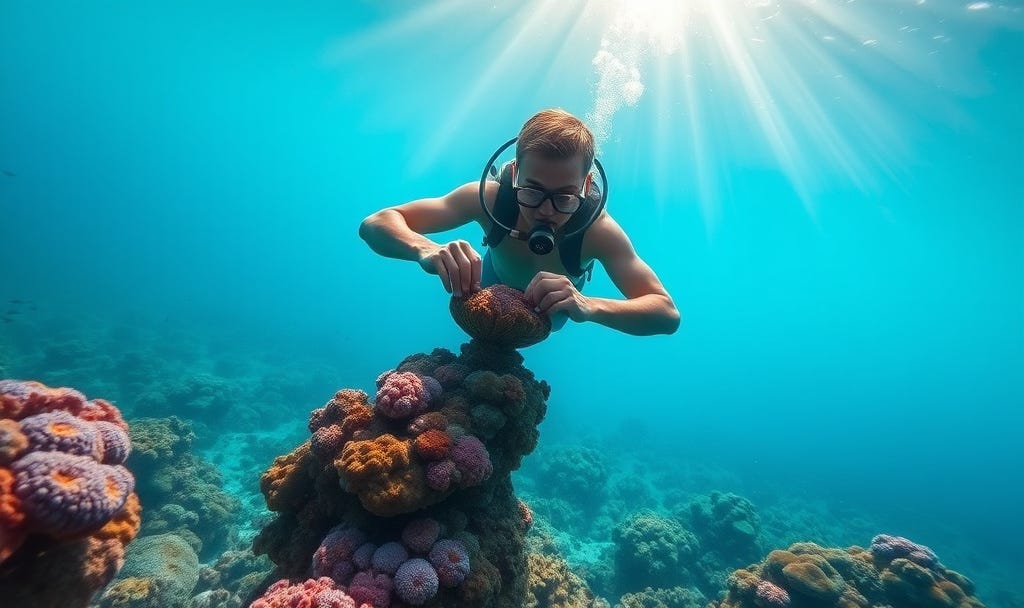
It started with a boat that barely stayed afloat.
Titouan Bernicot and his friends, all teenagers on the island of Mo’orea in French Polynesia, had scraped together every bit of money they earned from odd jobs and odd dreams. They bought a rickety aluminum skiff, patched the holes as best they could, and motored out to their favorite surf spot, boards stacked high, hearts higher.
They expected the usual magic: perfect waves peeling over a reef alive with color, purples and oranges and blues flashing beneath them like a living kaleidoscope.
Instead, they found silence.
From the surface, the water looked clear as ever. But looking down, the coral had turned ghostly white. When they dove in to touch it, the structures crumbled to dust in their hands. The reef that had fed them, protected their shores, and given them endless hours of joy was dying right under their feet.
Titouan was sixteen. He had grown up on a remote pearl farm in the Tuamotu atoll of Ahe, learning to freedive among sharks before he could read. The ocean was not a vacation destination; it was home, food, and identity. Corals provided the waves he surfed, the fish his family ate, and the barrier that kept his island from washing away.
He went home that day and started researching. What he found crushed him: coral bleaching, driven by rising ocean temperatures, was killing reefs worldwide. Half the planet’s corals had already vanished. Scientists predicted most could be gone by 2050. The adults spoke of complex solutions that would require decades, massive funding, and expertise no teenager possessed. The unspoken message to a teenager: this is not your fight. Wait until you are older, qualified, and funded.
He refused.
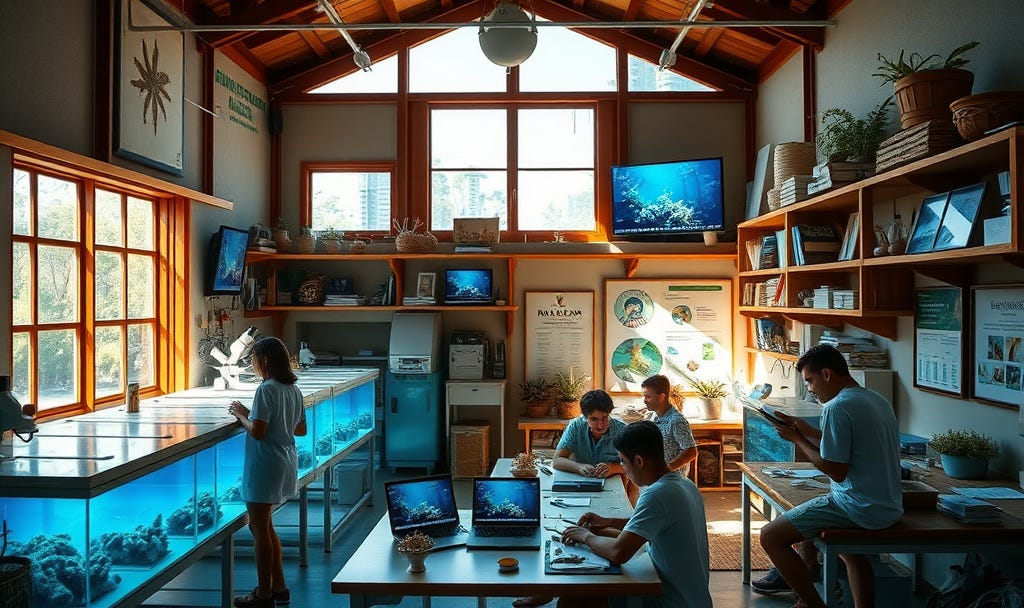
He and his friends began collecting fragments of surviving, heat-resilient corals, the “super corals” that somehow endured. They tied them to ropes and created small underwater nurseries in the lagoon. The first attempts were clumsy disasters. Corals died from poor attachment, wrong depths, or sudden storms. But each failure taught something. They refined techniques, monitored growth daily, and shared what worked on social media.
They named it Coral Gardeners, capturing the simple idea: treat the reef like a garden. Plant life where it had vanished.
The project grew organically. Local kids, surfers, and fishermen joined workshops. Social media posts of tiny fragments turning into thriving colonies went viral. Celebrities like Jason Momoa dove with them. Partnerships formed with Rolex, UNESCO, and National Geographic. Engineers and scientists offered help, building CG Labs for AI sensors that monitor nurseries in real time and identify resilient corals faster.
What began as a handful of island kids became a global movement. By 2025, Coral Gardeners will employ dozens of full-time employees, including marine biologists who once told Titouan he needed more school before acting. They have planted over 160,000 corals across French Polynesia, opened nurseries in Fiji, Thailand, Puerto Rico, and beyond. They develop AI sensors to monitor nurseries in real time, identify super corals faster, and scale restoration smarter.
Their goal remains audacious: one million corals planted worldwide, stories reaching one billion people, proving reefs can recover if we act now.
Titouan, now in his mid-twenties, still spends hours underwater every day. He says the magic moment comes months after planting: a bare fragment becomes a thriving colony, fish move in, crabs hide inside, life returns. One small act compounds into abundance.
The experts were right about the crisis’s scale. They were wrong about who gets to start solving it. Titouan’s story cuts through the noise. The solution mindset begins with deciding the problem is unacceptable and taking the first imperfect step.
We all have dying reefs in our lives: stalled dreams, broken relationships, overwhelming global challenges. The voice says, " Wait, prepare more, let someone else handle it.”
But the ocean cannot wait. Neither can we.
What “bleached reef” in your world needs you to grab a rope and start planting today?
This piece was inspired by Nir Bashan’s conversation on Episode 706 of Passion Struck, exploring The Solution Mindset.
Listen to the full episode:
Pre-order The Solution Mindset: https://www.nirbashan.com/
Download the free companion workbook HERE