

What’s the ROI of Your Aliveness?
Why we are winning the logistics of our lives but losing the human being inside of them

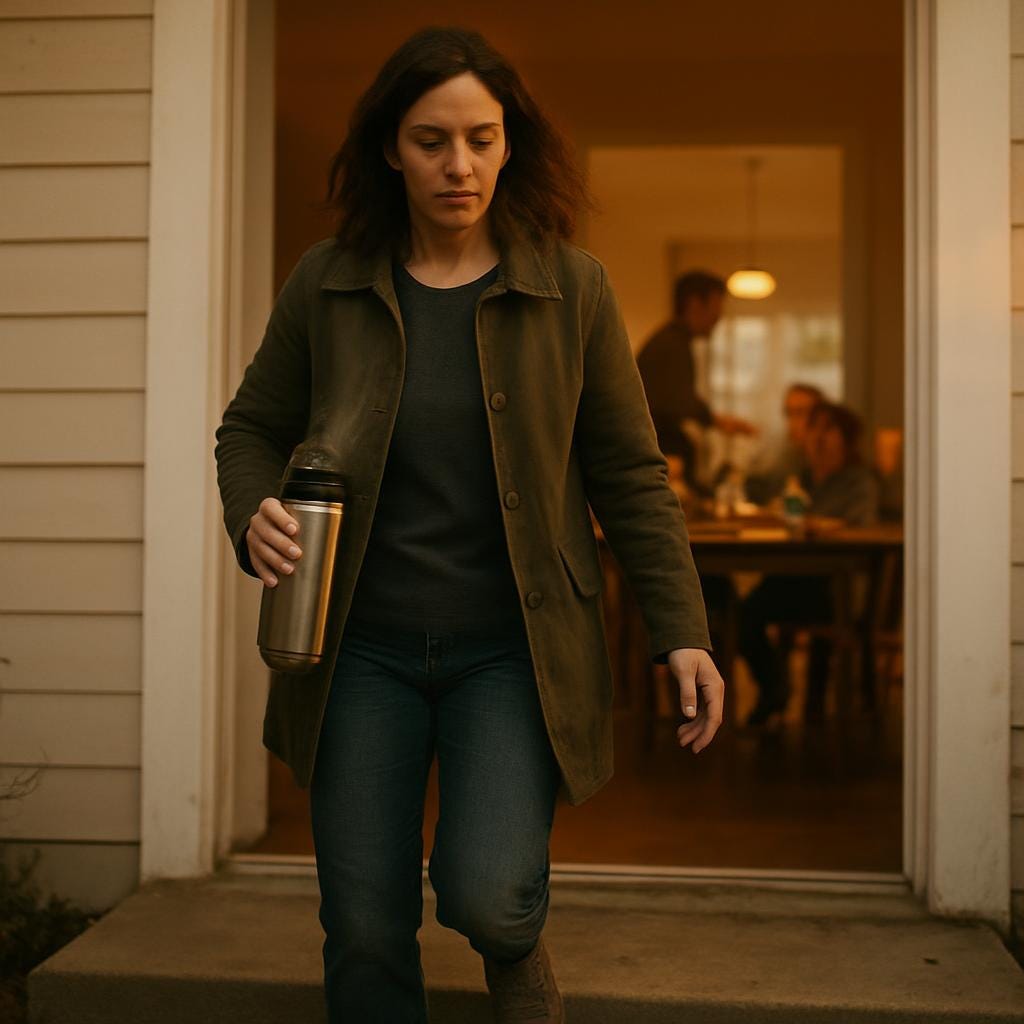
Elena’s headlights cut a narrow, impatient corridor through the heavy Florida dusk and stopped at the white garage door like a question she couldn’t answer. She sat in the car with the engine’s low vibration in her chest and the grocery tote still warm in the trunk. The kids’ cleats thudded against the backseat; her phone buzzed three times and lay face down. Everything in her life was organized to run without her noticing—but tonight, the choreography felt like a confession.
She could list the facts of the house faster than anyone: soccer at five, piano at six, bedtime at eight; lunchbox rotations, allergy lists, the exact cadence of school emails she had learned to predict. She negotiated calendars the way other people negotiated salaries. Her inbox was a landscape she could traverse blindfolded. Her competence made a clean map. It did not, however, tell her where she lived.
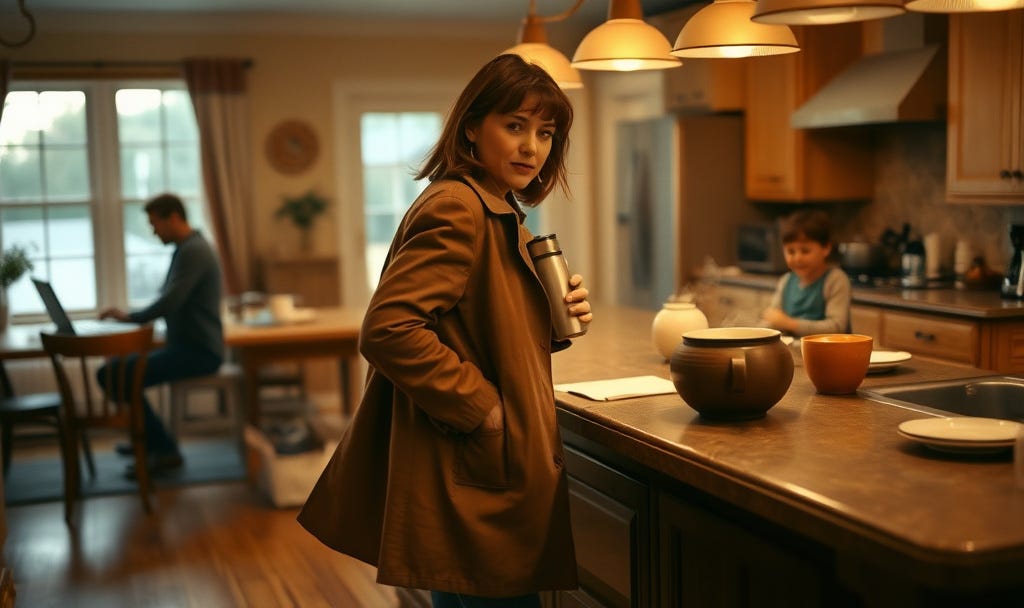
Inside, the house smelled of lemon cleaner and the faint caramel of overcooked dinner. Mark was at the island with his laptop, shoulders tense, scrolling through a news feed like a man skimming to skip feeling. “You’re home,” he said without turning.
“I’m home,” she answered. Her voice felt like a voice on hold.
He looked up long enough to let something that might have been recognition settle on his face. “We’re doing great,” he said, and the sentence landed like a toast to endurance. It did not ask what they were surviving for.
She opened the fridge. The calendar on its door was a colorful grid of squares—appointments, practices, dentist calls. It was perfect: efficient, visible, full. It was also a kind of accounting ledger for a life she kept balancing and re-balancing until the numbers no longer represented anything living.
She had designed this map; she had optimized this machine. The machine functioned. The people inside it did not always feel like people.
The cost showed up that night not as a single event but as a small, repeated absence.
At dinner, Elena sat at the head of the table while one eye stayed on the bright rectangle of her phone. Her answers were efficient—managing the conversation rather than entering it. Later, at bedtime, she read the same book she’d read a hundred times while her attention drifted toward a meeting thread she’d promised to check. Maya asked, simply, “Mom, were you listening tonight?”
Elena’s throat tightened. She had been there with bones and breath. She had not been there with the kind of attention that leaves footprints.
The Garden and the Audit
A few mornings later, she walked past the community garden because she needed grass and sky the way a phone needs a signal. A man with soil under his nails and a hat in the crease of sunlight was kneeling over seedlings. He moved as if he measured time by roots.
He glanced up and said, “You look like someone who has mastered the art of being everywhere at once, but hasn't had a moment to be anywhere for herself.
She laughed, but it sounded like a cough. “Is there a prescription for that?”
He patted the bench, handed her a steaming cup from a thermos, and said, “You don’t need a prescription. You need an audit. Most people audit accounts or calendars. They never audit their aliveness.”
He dug a bit of earth into the bed of a plant. “You’re investing time into being useful. Usefulness is fungible. Ten percent—reallocated—into presence gives you a different return. That’s the ROI of aliveness.”
Numbers comforted her. “Ten percent? What does that look like?” she asked.
“If your practical, logistical day eats six hours, ten percent is thirty‑six minutes,” he said. “Thirty‑six minutes is enough for three unhurried questions and one real silence. It’s not a miracle; it’s a habit. Invest thirty‑six minutes and observe what compounds.”
She imagined thirty‑six minutes as money she could spend and felt relief. Thirty‑six minutes were not an abdication; they were an experiment. She left the garden with dirt on her shoes and the gardener’s sentence in her pocket.
The First Experiment
That evening, she tried the experiment. She put her phone face down at six‑thirty and set a kitchen timer for thirty‑six minutes. The habit in her was to tidy the visible edges—load the dishwasher, check the calendar, answer one last email thread—because tidy edges felt like proof of responsibility. She told herself she’d do all that after the timer. She sat.
Maya draped herself over the chair with a half‑eaten apple and talked about recess like it was a small universe. Leo narrated his triumph in catching a grasshopper. Elena asked, without an agenda, “What was the weirdest thing that happened today?” and then, after she had listened without reaching for a device, “What do you wish I knew about you today?”
The children thought, answered small, honest things, and the room rearranged itself around those answers. She listened until silence arrived twice—an informal rule the gardener had recommended—and let the quiet hold.
When the timer chimed thirty‑six minutes later, the dishwasher waited. Emails waited. The house had not fallen apart. Maya hugged her with a practical squeeze and said, “Thanks for hearing me.”
The line was small, but it landed precisely.
Resistance and Habit
It was not, of course, a tidy conversion. The weeks that followed were full of trials. A client scheduled an emergency call during the one Saturday she’d reserved for family. The PTA president asked if she could help with fundraising. Guilt rose like steam when she ignored an after‑hours message; reflex tugged her toward instant reply.
She failed, sometimes. She answered a message in the middle of dinner out of reflex. She missed a school pickup time when a meeting ran long. The change was not a tidy curve; it was a jagged line—steps forward, slips back.
The gardener had not promised perfection. He had promised a practice. He had reminded her that she’d become excellent at the dance, but she had forgotten the music. Now, even when she stumbled, she was finally beginning to feel the floor beneath her feet.
To make the experiment durable, she named it. The Unscheduled Half Hour became a ritual twice a week—phones in a bowl, a timer on the counter, no agendas.
Sometimes the time was warm talk that stretched into something deeper; sometimes it was shared silence. She taught Mark a simple script: “I’m taking thirty‑six minutes—phone in the bowl—will you hold this with me?”
He grumbled the first time, then put his device in the bowl and squeezed her hand. Later, he began setting his own thirty‑minute pockets without prompting.
She measured the ROI in small, stubborn returns.
The night she refused an urgent weekend call, a team member solved the problem without her and sent a brief report the next morning. At work, she stopped responding to emails within five minutes and discovered that fewer requests became emergencies when she gave them less urgent oxygen. At home, a child who had been a silent satellite began asking for help with a science project. Mark started whistling again in the mornings, a habit he’d lost to deadlines; Elena noticed the sound as if she were hearing a neighbor reintroduce himself.
Micro‑Presence When Everything Presses
The real test came when everything tried to squeeze her back into old grooves. A dishwasher broke on a Thursday; a carlight blinked a warning on Friday; on Saturday, a client called—one of those calls that felt urgent because someone else had made it so. She could have filled each gap with reactive labor—the old pattern of mop-and-answer, mop-and-answer until she herself was waterlogged.
Instead, she used a different tactic: micro-presence. She took ten minutes between tasks to sit on the front step while the repairman assessed the dishwasher. She spent five minutes in the car breathing before answering a client. She was not absent from responsibility; she reframed where presence lived.
At dinner that Saturday, Mark set down a plate and looked at her across the clutter of takeout boxes. “You’re different,” he said simply.
She heard the old man’s gardening voice in her head: usefulness fills a house; presence makes it a home. “I feel less ragged,” she said. The words had weight. “I’m deliberately keeping some minutes that are only for being here.”
He folded his hands over the table. “I noticed,” he said, and the sentence had the quiet gravity of something observed and treasured. It was not a poetic resolution; it was ordinary and exact. She was present. He noticed. That noticing changed the tone of evenings more than any cleaned cleat or paid bill ever had.
What Changed—and What Didn’t
Elena learned a distinction: presence is not the absence of task. Presence is the reallocation of attention.
The calendar did not empty. The boxes did not vanish. What changed was who carried the life inside them. Tasks were still done, but with attention rather than as a substitute for it.
Small returns accumulated: a child who asked for help and stayed until the problem was solved; Mark initiating conversation without a checklist; friends who noticed she no longer only arrived as a solution‑provider but as a person who could be present. The ROI did not appear as a spreadsheet number. It showed up in faces and in the way laughter lingered.
Toolkit: The 36‑Minute Experiment (Use Tonight)
Schedule it. Choose one 36‑minute block within the next 48 hours. Put it on the family calendar as non‑negotiable.
Phone policy. During this time, phones go in a bowl in another room. No multitasking. No planning. No problem‑solving.
Ask and listen. Use three open questions (for example: “What was the best part of your day?”, “What was the hardest part?”, “What do you wish I knew about you today?”). Listen until the person pauses twice before responding.
Close with one quiet minute. After a conversation, let one minute of silence pass—no agendas, no fixes—before resuming responsibilities.
Journal one sentence. Write a single line about what changed. Repeat weekly.
Quick scripts (to reduce friction)
To your partner: “I’m taking thirty‑six minutes after dinner to be here. Can you hold this with me?”
To a child: “I have half an hour. Tell me two things: the best and the hardest.”
At work: “I’ll respond first thing tomorrow morning.” (Sets a boundary without drama.)
Mini metrics to notice returns
Week one: count uninterrupted conversations.
Week four: note one visible behavior shift (a child who initiates, a partner who stops checking the phone).
Subjective: nighttime ease (rate evenings 1–10).
Final Reflection: Becoming the Gardener of Your Life
Elena’s story shows a small, stubborn truth: being useful keeps things running; being alive changes what runs.
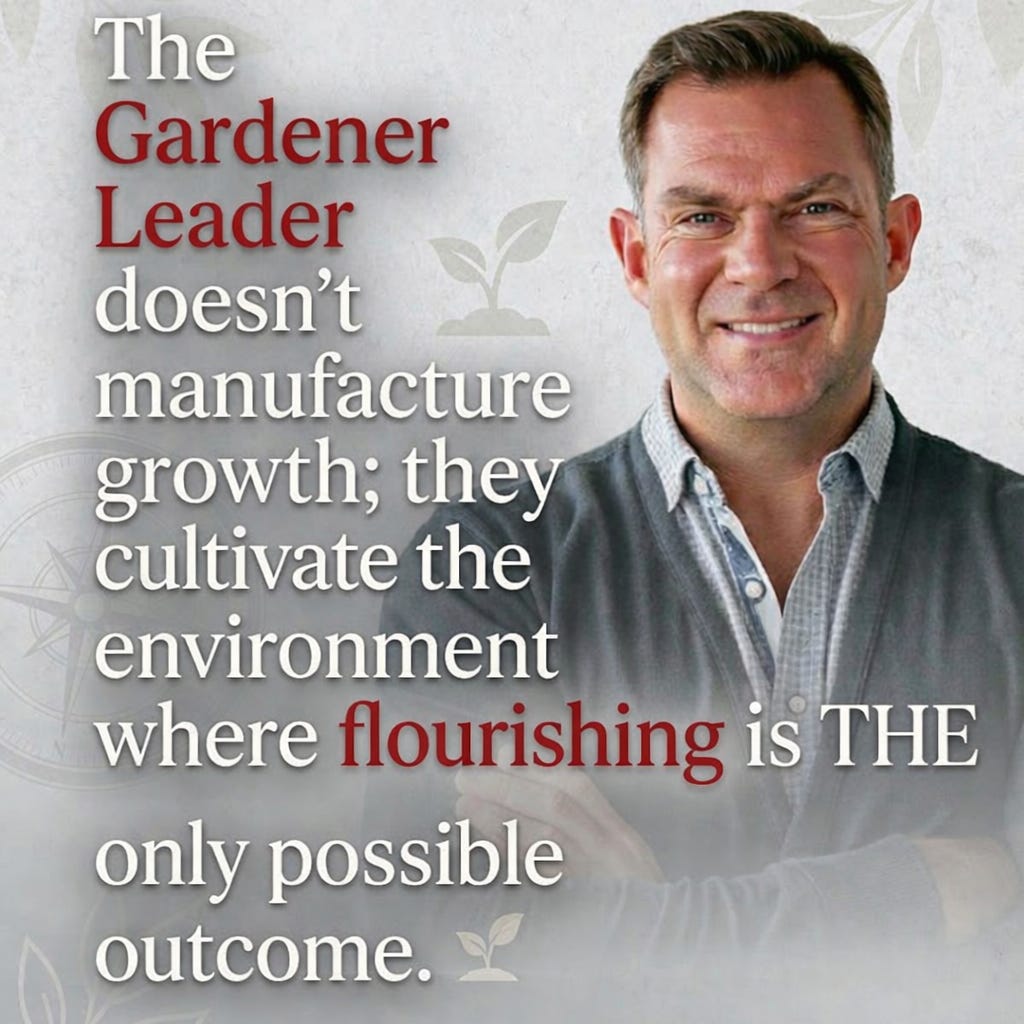
You are the architect of your home’s emotional climate. The calendar boxes will not disappear. The work will not vanish. But the choice of who carries that life—manager or gardener is yours.
Open your family calendar right now. Where could thirty‑six deliberate minutes fit tonight? What might begin to grow if you planted them there?
Elena walked home from the garden with soil in her shoes and a small idea sown deeper than that: aliveness, once tended, becomes a quiet currency—paid out not in perfect checklists but in the soft returns of being seen. She had not solved everything. She had learned a practice. The payoff compounds slowly: a hand held longer than necessary, a child who tells a secret, a spouse who looks up and stays.
That is ROI you can live in.
Check out my solo episode on the ROI of Aliveness
Download the FREE Digital Companion Guide & Workbook with prompts to become the gardener of your life.
Thoughts? Let me know below this essay!
Every 🧡, restack, or comment you share here on Substack
is like a signal flare…..
It helps this message find the person who is still walking
their own “schoolyard” alone.
Thank you for being part of this ecosystem.
I love turning these essays into a two-way conversation
So please let me know your thoughts below.
Every ❤️, restack, or forward helps more people feel like they truly matter.
There’s something very grounded in how this piece connects philosophy to something measurable.
The idea of “ROI of aliveness” could feel abstract, but anchoring it in 36 minutes makes it tangible...
Another great essay, John!
I use this one pretty much every day, and can confirm that it just plain works: “What was the best part of your day?”