

The Power of the 1% Rule
Lessons from Nick Thompson on How Small Daily Wins Create Lasting Change


Transformation rarely announces itself. It hides inside the smallest habits, like the one extra rep, the quiet morning run, the decision to keep going when it would be easier to stop.
The smallest 1% changes, repeated daily, rewire identity.
This week on Passion Struck, I sat down with Nicholas Thompson, the CEO of The Atlantic and author of The Running Ground: A Father, a Son, and the Simplest Sport. Together, we explore how running became Nick’s lifelong teacher — shaping his mindset, revealing the limits of his endurance, and ultimately transforming how he sees success, failure, and self-worth.
For Nick, every race was more than physical. It was psychological — a mirror reflecting the struggle to stay disciplined, curious, and authentic, even when life’s terrain turned uphill.
The 1% Rule: The Science of Incremental Mastery
Runners know this truth better than most: you don’t conquer the marathon overnight. You get there one small 1% improvement at a time.
“You don’t have to transform your life all at once. You just have to take the next step.” — Nick Thompson
Nick describes his own evolution this way: each run taught him that consistency beats intensity. The tiny daily decision to lace up his shoes — rain or shine — rewired his brain for resilience. He wasn’t chasing perfection; he was chasing progress.
This 1% rule applies far beyond running. Whether you’re building a company, writing a book, or trying to live more intentionally, growth rarely comes in bursts. It’s the compound interest of effort.
But what happens when the 1% rule isn’t just a strategy — it’s a mirror?
Subscribe to The Ignited Life
If this idea of small steps creating big transformation resonates, you’ll love my Substack — The Ignited Life. Each week, I share science-backed tools and stories to help you grow your 1%: in purpose, resilience, and impact.
👉 Subscribe here to start your 1% journey.
When Running Becomes a Mirror for Life
Nick’s book, The Running Ground, is both a memoir and a meditation on movement. It begins with his early memories of running alongside his father — a brilliant but turbulent man — and evolves into a reflection on legacy, discipline, and love.
Running became a thread between generations. It was how Nick stayed connected to his father, even after loss. But it was also how he learned to distinguish between pain as information and pain as truth, one of the book’s central lessons.
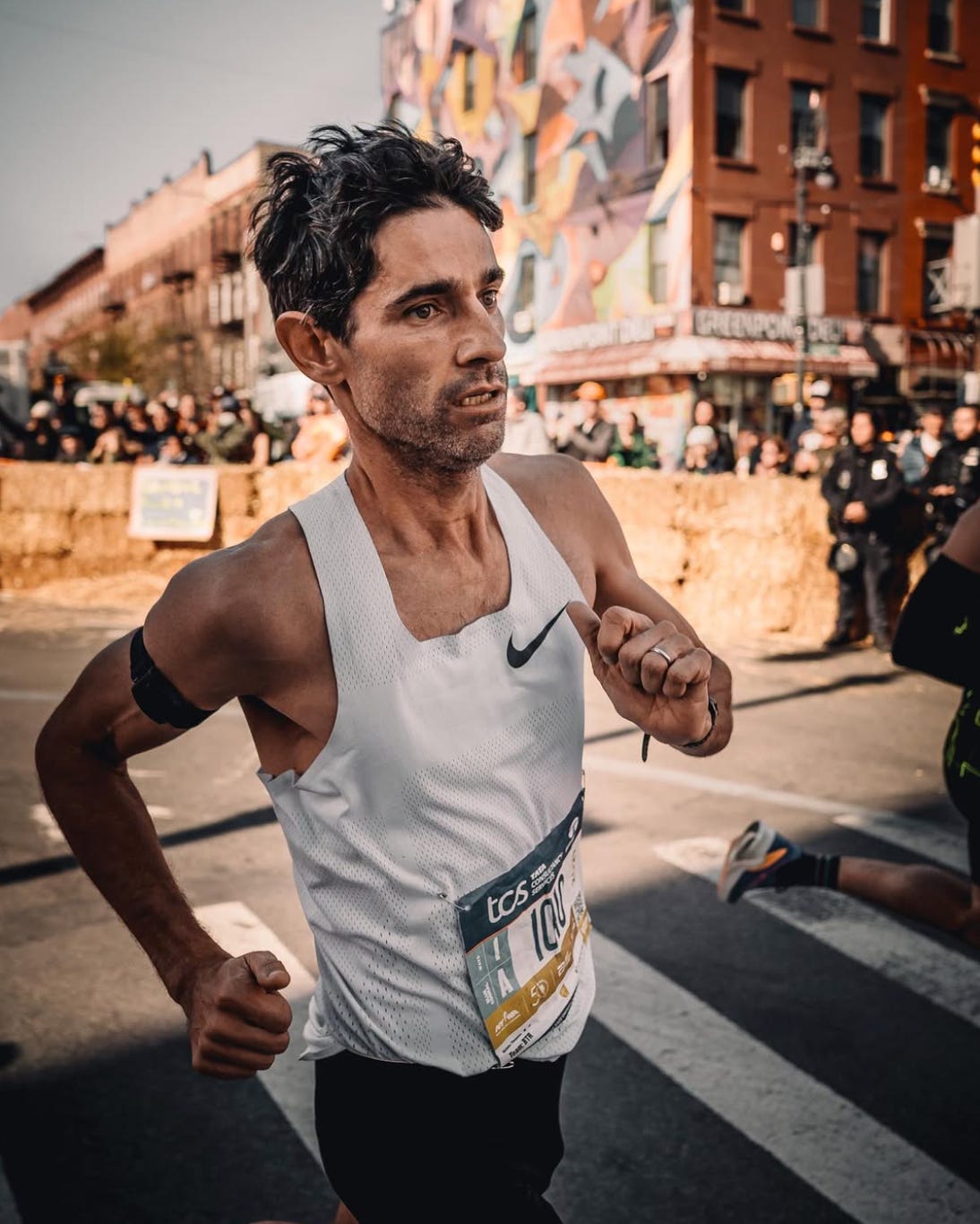
Pain, he explains, isn’t always a signal to stop. Sometimes it’s your brain’s way of protecting you from your own potential. Learning to listen, but not always obey, became part of his mental training.
The same principle applies to life. Whether it’s the discomfort of rejection, failure, or change, growth begins when you stop mistaking temporary pain for a permanent limit.
Breaking the Ceiling: How Belief Masks as Data
One of the most fascinating parts of Nick’s journey came when he hit a wall — literally and figuratively. For seven years, he couldn’t break the 2:40 marathon barrier. His peers even gave him the nickname Mr. 2:43.
But then a coach reframed his thinking. What Nick thought were data-driven limits were actually belief-driven ceilings. His mind had quietly decided what was possible and then built evidence to support it.
Once he realized this, everything changed. Training smarter, trusting his coach, and resetting his perception of “fast,” Nick shattered that invisible ceiling and ran a 2:29 marathon at age 44.
The takeaway? Every human has a version of Mr. 2:43 — that internal barrier we defend with logic, when in truth, it’s fear. The breakthrough begins with questioning it.
The Leadership Parallel: The Discipline of Showing Up
Nick’s story doesn’t just speak to runners — it speaks to leaders, creators, and anyone trying to live with purpose.
At The Atlantic, he leads one of the world's most respected journalistic organizations while still finding time to train, write, and parent. The throughline? Intentionality.
He treats leadership the same way he treats running: as a practice in small, consistent, 1% improvements. Each conversation, each decision, each setback becomes a rep — a chance to refine how he shows up.
It’s a lesson that mirrors my philosophy on Passion Struck: success isn’t born of grand gestures but of the discipline of showing up: fully, intentionally, and repeatedly.
The Finish Line Isn’t the Point
At the end of The Running Ground, Nick reflects on how running taught him to find meaning not in the finish line but in the process itself.
When he finally won the race he’d dreamed about as a kid, and later ran beside his son in that same event, the lesson wasn’t about victory. It was about legacy. About learning when to lead, when to pace, and when to step back and let others run their own race.
And that’s the real 1% mindset: to live with patience, to lead with humility, and to move through life knowing that what matters most isn’t how fast you go — but how intentionally you take each step.
Want to go deeper? Listen to the ad-free episode that expands on this post—plus get a companion workbook for Passion Struck Episode 683.
Download the Companion Digital Workbook HERE.
One more thing: My first children’s book, You Matter, Luma, is now available for pre-sale. It’s a story for 4-8 year olds about kindness, courage, and the ripple effect of knowing you matter, lessons every adult at work could use, too.