


In the summer of 2015, Dr. Stephen G. Post stood before a ballroom of neuroscientists and philosophers in Bangalore, India. He was there to talk about "the deeply forgetful"—his term for those lost in the fog of advanced dementia.
Post’s argument was essentially a social critique: he believed that Western society had fallen into a “hyper-cognitive” trap. We have decided, collectively and somewhat arbitrarily, that a person’s value is tied to their “mechanics”—their ability to recall a name, solve a puzzle, or use a fork. When those mechanics break, we assume the person is gone. We use terms such as “husk” or “shell.”
Then the Dalai Lama entered the room.
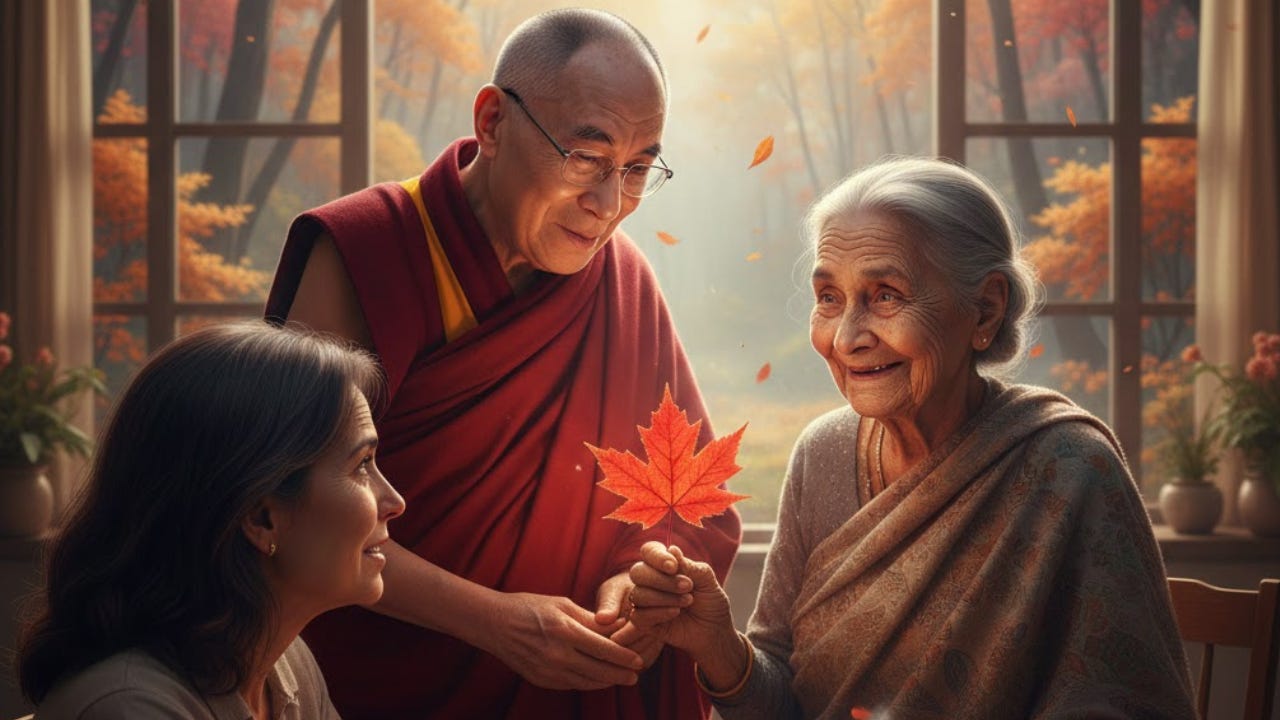
He didn’t wait for the Q&A. He simply interrupted. “There’s no reason to think less of somebody because they are memory impaired,” he said, looking around the room. “They still have creativity, they still have love. They can still enjoy the beautiful colors of the fall leaves.”
It was a profound moment of “thin-slicing.” In ten seconds, the Dalai Lama had identified the fatal flaw in Western neurology:
We have confused the hardware with the occupant.
This moment, recounted from my interview with Dr. Post about his book, Pure Unlimited Love: Science and the Seven Paths to Inner Peace, is more than a touching anecdote. It is a portal into a deeper truth about consciousness. In a world where AI debates rage over what constitutes a “mind” and elder care crises loom, Post’s story challenges us to rethink love not as a fleeting emotion, but as a disciplined force that transcends matter.
The Mystery of the “Salty Joke”
If you want to understand what the Dalai Lama meant, you have to look at a phenomenon that researchers at the University of Pennsylvania and Stony Brook call Paradoxical Lucidity.
For decades, we’ve been told that dementia is a one-way street—a steady, irreversible erosion of the self. But when researchers began interviewing caregivers, they found something that didn’t fit the model. They found “blips.”
Consider the case of a daughter caregiving for her mother, who had been non-verbal and seemingly “absent” for years. In the middle of a routine afternoon, the mother suddenly looked her daughter in the eye and cracked a perfectly timed, salty joke.
To a neurologist, this is an impossibility. A joke requires “high-wire” cognitive computing: you have to understand social norms, recognize the exact moment to subvert them, and execute the delivery with wit. Most importantly, a “salty” joke requires a specific temperament—an edge, a sense of humor, a personality.
This single “blip” disproves the entire “husk” theory. It suggests that the person’s specific wit was never erased; it was merely behind a jammed door.
A recent national survey by the Gallup Organization suggests these aren’t just anomalies. Upwards of 44% of dementia patients experience these sudden returns to “self.” This creates a massive intellectual problem for the materialist view: If the brain is a computer and the hard drive is physically degraded, how can the software suddenly run perfectly for five minutes?
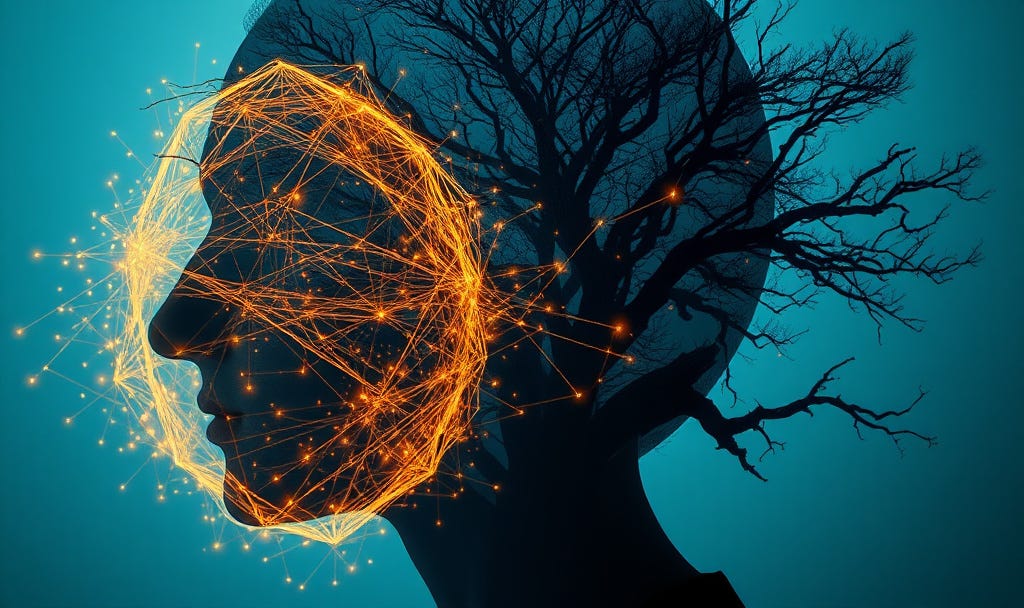
The answer, Dr. Post suggests, is that Mind Precedes Matter. The brain doesn’t produce consciousness; it is channeled through it. This echoes the Dhammapada: “Mind precedes all mental states. Mind is their chief; they are all mind-wrought.”
The Giver’s Glow: A Biological Survival Strategy
But here is the real twist: This isn’t just about the patient. It’s about the person sitting in the chair next to them.
When caregivers witness these moments of lucidity. When they see that “Mom is still there,” something shifts in their own biology. We’ve always been told that caregiving is a “burden.” It’s thankless and exhausting. However, Post’s research shows that caregivers who adopt a mindset of Pure Unlimited Love, who see the enduring soul rather than the broken mechanics, experience physiological improvements. This is the “Giver’s Glow.”
Science shows that when we move from “self-centeredness” to “other-centeredness,” our physiology follows suit:
73% lower stress levels.
89% improved well-being.
92% enriched sense of purpose.
The Seven Paths to Inner Peace
The heart of Dr. Post’s work lies in seven specific paths toward a flourishing life. These paths operationalize the “One Mind” theory into daily practice.
1. May You Give and Glow
Generous giving is the antidote to self-centeredness. This “helper’s high” turns grief into purpose. Dr. Post’s research reveals that widows who volunteer recover more robustly. Helping others is the most direct way to liberate the self.
2. May You Heal with Kindness
Kindness is a universal calling often lost in our rush. Model kindness to raise compassionate children. In a world pulling toward negativity, convene around shared values and grace rather than the “screams” that scar young minds.
3. May You Follow Your Calling
Post’s own life changed at 14 when he tutored kids in a basement. He didn't chase prestige; he followed the "soul's whisper." He suggests we find our own "ferry ride"—a place of silence to hear what we’re meant to do.
4. May You Raise Kind Children
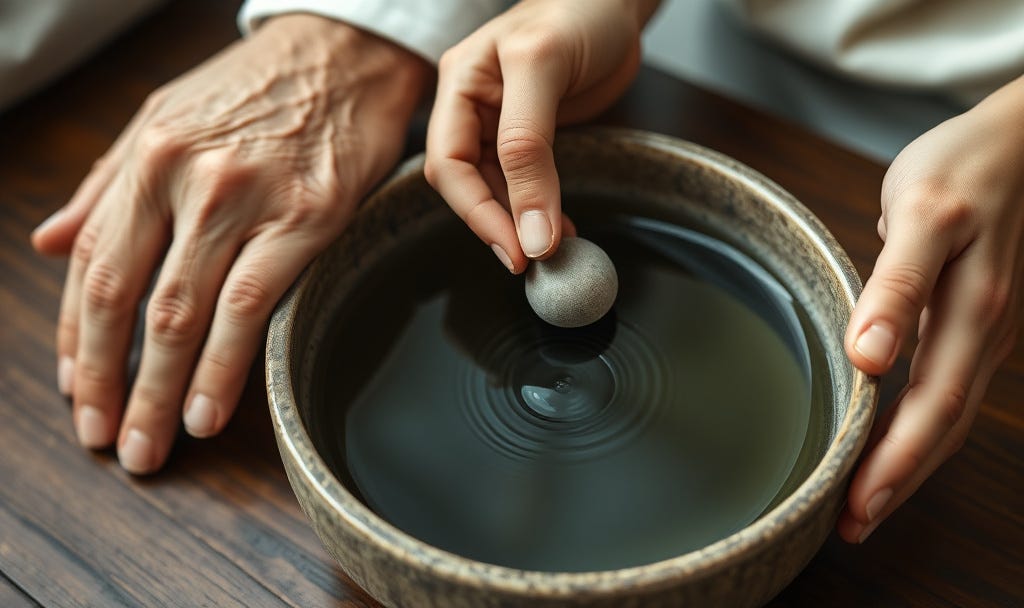
Teaching kindness counters the cycle of global indifference. Small acts ripple outward, much like the bunny’s kindness in You Matter, Luma. Parents, your example is the greatest teacher; when you live love, your children learn to bloom.
5. May You Know the One Mind
Maternal premonitions and shared dreams point to a unified consciousness. The mind is a vast field. Embracing this interconnectedness dissolves the illusion of separation.
6. May You Cherish the Gift of Nature
In the beauty of fall leaves, we find what U.C. Berkeley Professor Dacher Keltner calls “moral beauty.” Nature reminds us of our impermanence and our interdependence. We need awe to stay human. The fall leaves the Dalai Lama mentioned aren't just scenery; they are a reminder of our interdependence.
7. May You Honor the Spirit of Freedom
Love and freedom are twins; true love liberates rather than controls. Use the “Positive Golden Rule”: contribute to the freedom of others. Lean outward to the neediest while balancing your own family.
Love as Action’s Fire
The Dalai Lama’s words in Bangalore bridged East and West, reminding us that even the memory-impaired still possess creativity and love. As the research shows, these moments of lucidity are not merely “biological blips”—they are invitations to recognize the shared humanity that endures any disease.
Compassion is a discipline. It is empathy plus the drive to alleviate suffering. In an era of materialist bias, we must remember: Mind precedes matter. Whether it is a mother’s intuition across 3,000 miles or a spontaneous moment of clarity in a nursing home, the light of the human spirit never truly goes out.
If 2026 feels like a year to reclaim something essential, start here. Identify suffering and alleviate it. Choose one path, one expression of unlimited love today.
What small act will you release into the world this week? Hit reply. Your ripple might just awaken mine.
Listen to the full exploration in Passion Struck Episode 712.
Download the FREE Pure Unlimited Love Workbook, practical prompts to cultivate compassion in action, deepen inner peace, and integrate the seven paths into everyday life.