

The Lie of Plan B
What Matt Higgins Taught Me About Commitment, Identity, and the Courage to Stop Waiting


I’ve interviewed astronauts, Navy SEALs, billionaires, Olympians, and world-renowned scientists.
Many of them have achieved things that seem impossible from the outside.
But every so often, I meet someone whose story forces me to rethink one of my deepest assumptions about success.
Matt Higgins was one of those people.
Most people know Matt today as the vice chairman of the Miami Dolphins, a guest shark on Shark Tank, a Harvard Business School instructor, and the co-founder of RSE Ventures.
But that’s not where his story begins.
It begins with a young boy selling flowers on street corners in Queens, scraping gum off McDonald’s tables, sleeping on the floor, and desperately hoping someone would come save his family.
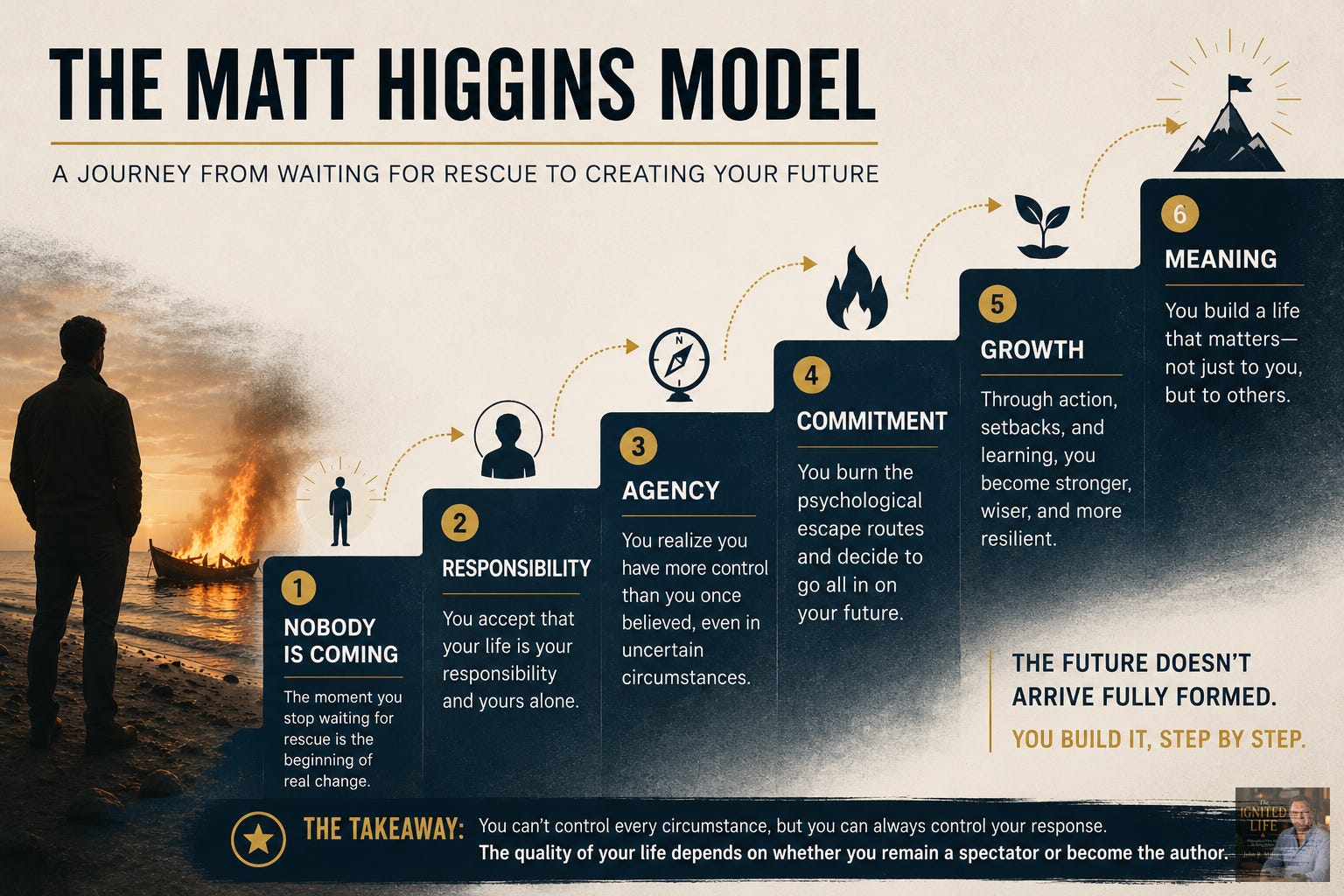
And then one day, he realized nobody was coming.
That realization changed everything.
When Nobody Is Coming to Save You
What struck me most about Matt’s story wasn’t the adversity he endured. It was the psychological shift that followed.
Like many children growing up in difficult circumstances, Matt spent years believing that the solution to his problems would eventually arrive from somewhere outside himself. Perhaps it would come through a mentor, a teacher, an opportunity, or simply a change in fortune. The details mattered less than the underlying belief that someone or something would eventually alter the trajectory of his life.
When that expectation finally collapsed, it could have produced resignation. Instead, it produced agency.
What makes this story resonate so broadly is that most of us have our own version of waiting. We may not be waiting for rescue in the literal sense, but many people spend years waiting for the conditions that will finally allow them to become who they want to be. We wait for greater confidence before taking a risk, more certainty before making a decision, or the perfect timing before pursuing an opportunity. We tell ourselves that action will begin once enough variables fall into place.
Yet life rarely works that way. Many of the qualities we hope to acquire before acting—confidence, resilience, judgment, and self-belief—are developed through action itself. They are not prerequisites for growth. They are often its byproducts.
Why We Wait Longer Than We Need To
One of the most persistent myths about successful people is that they possessed unusual certainty before making consequential decisions.
Looking backward, their choices seem obvious. Their paths appear coherent. Success creates the illusion that they somehow knew what would happen.
The reality is usually far messier.
When Matt decided to leave high school, earn a GED, and pursue college, most of the adults around him believed he was making a mistake. Their concerns were understandable. They were evaluating his decision through the lens of convention and probability. Matt was evaluating it through the lens of his own circumstances and aspirations.
This tension reveals something important about human behavior. The obstacle is often not a lack of information. It is our relationship with uncertainty.
We tend to assume that certainty creates action. More often, action creates certainty. Confidence develops through experience. Judgment emerges through decisions. Clarity is frequently discovered on the path rather than before it.
The longer we insist on certainty before moving forward, the longer we remain trapped in analysis, waiting for a future version of ourselves to feel ready.

The Hidden Purpose of a Backup Plan
The title of Matt’s book, Burn the Boats, draws from a familiar story. Destroy the ships. Remove the retreat. Eliminate the possibility of turning back.
Most people interpret this idea as a lesson in commitment. I think it is actually a lesson in identity.
When people cling to backup plans, they are not always protecting themselves from practical risk. Often, they are protecting themselves from emotional risk.
A backup plan can help avoid a more uncomfortable question: What if I commit fully and still fail?
That question carries weight because failure is rarely experienced as a neutral event. It often becomes intertwined with self-worth. A failed business can feel like evidence that we are not capable enough. A rejected manuscript can feel like proof that we lack talent. A career setback can become a referendum on our value.
Under those conditions, hesitation feels reasonable.
The challenge is that the same mechanisms designed to protect us can also prevent us from fully engaging with opportunities that matter most. Sometimes the boats we need to burn are not physical alternatives. They are psychological escape routes.
Why Achievement Cannot Answer Questions of Worth
As I listened to Matt describe his journey, I found myself returning to a theme that has become central to my own work.
Many people spend years pursuing achievement in hopes that it will eventually provide something deeper than accomplishment. They hope it will offer reassurance.
Reassurance that they are valuable. Reassurance that they are enough. Reassurance that they matter.
Achievement can provide moments of validation. It can create opportunities, generate recognition, and confirm competence. What it cannot do is permanently resolve questions of significance.
This is why so many high achievers continue searching long after reaching goals they once believed would change everything.
The achievement delivers what it promised. It simply wasn’t promising the thing they truly needed.
The more I research and write about mattering, the more convinced I become that many forms of striving are attempts to answer questions that accomplishment alone cannot address. We want to know that our lives carry meaning. We want to know that our presence has weight. We want to know that we are valued not merely for what we produce, but for who we are.
Success can reinforce those feelings. It cannot create them from scratch.
Why Growth Always Feels Like Uncertainty
One of the most compelling parts of my conversation with Matt involved his perspective on anxiety.
Modern culture often treats anxiety as something to eliminate. We search for strategies to reduce it, avoid it, or work around it.
Yet many of the most important experiences in life arrive wrapped in uncertainty.
Starting a business, writing a book, changing careers, entering a relationship, becoming a parent, stepping into leadership—none of these experiences provides guarantees.
Growth requires movement into territory where outcomes remain unknown.
This does not mean anxiety is always beneficial. It means that discomfort is not always a warning sign. Sometimes, it is evidence that we are operating at the edge of our current capabilities.
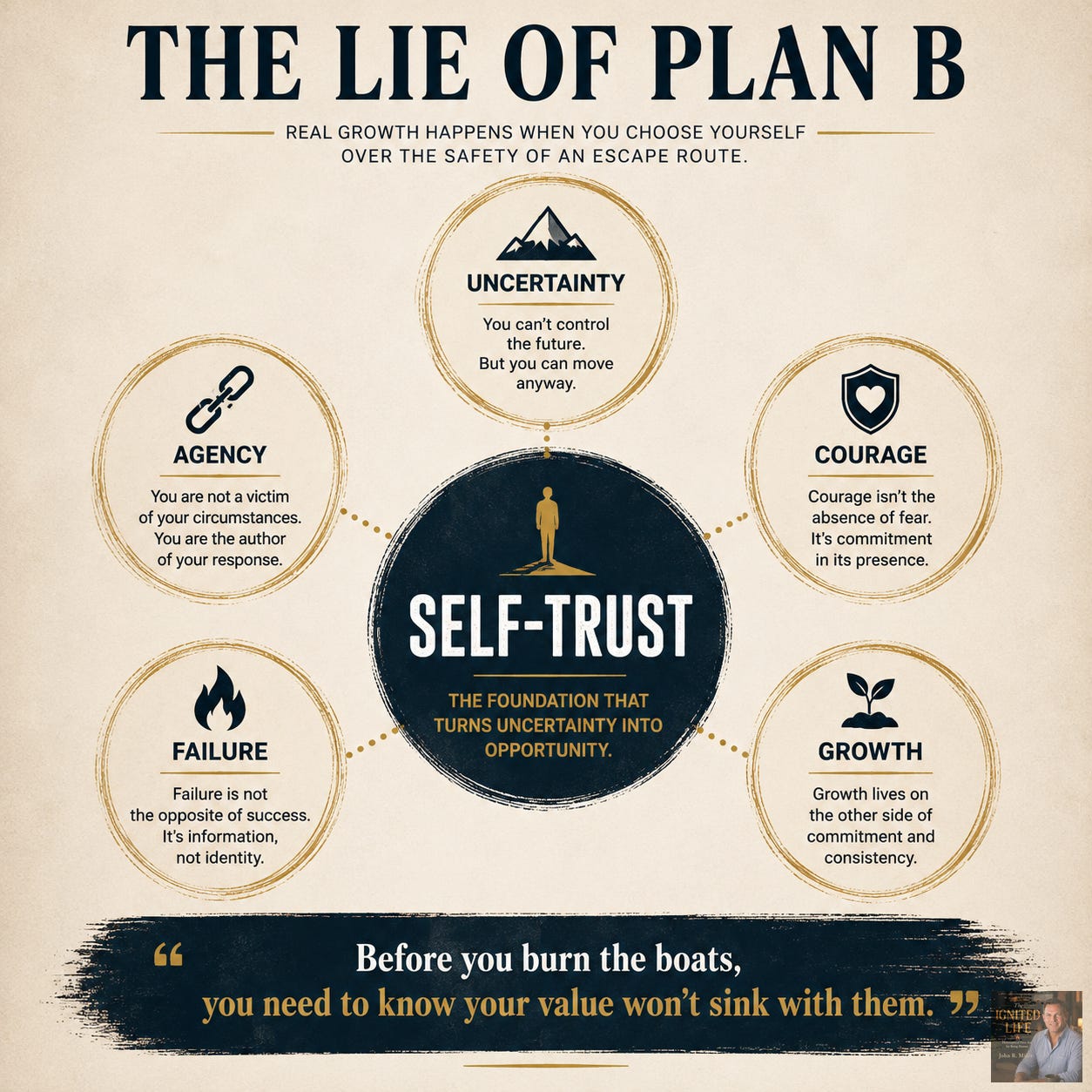
The challenge is not to eliminate uncertainty. The challenge is to develop enough trust in ourselves that uncertainty no longer prevents movement.
What Matt Higgins Changed About My Thinking
Going into this conversation, I expected to hear insights about entrepreneurship, investing, and calculated risk.
What stayed with me afterward was something deeper.
Matt’s story is not ultimately about becoming fearless. It is about developing a relationship with yourself that can survive uncertainty.
People often assume courage comes from confidence in the outcome. More often, courage comes from confidence in your ability to respond regardless of the outcome.
That distinction changes everything.
When you trust yourself to adapt, learn, recover, and continue moving forward, uncertainty loses much of its power. The future becomes less about predicting what will happen and more about believing you can meet whatever happens next.
Takeaways
Stop Waiting for Perfect Clarity
Many of life’s most important decisions become clearer through action than through analysis. Clarity is often a result of movement rather than a prerequisite for it.
Separate Worth from Outcomes
Achievement can validate competence, but it cannot determine value. The stronger the connection between self-worth and performance, the harder it becomes to make a meaningful commitment.
Examine Your Backup Plans
Some backup plans are practical. Others exist primarily to protect the ego from disappointment. Understanding the difference can reveal where fear is influencing decision-making.
Build Self-Trust
Confidence grows from evidence. Self-trust allows you to act before the evidence exists. It is one of the most important foundations for intentional living.
Final Reflection
Burn The Boats | Matt Higgins’ story begins with a young boy realizing nobody was coming to save him.
What makes the story meaningful is not that he eventually became successful. It is that he stopped waiting for some future circumstance, opportunity, or version of himself to provide the permission he needed to move forward.
That transition may be one of the defining challenges of adulthood.
At some point, each of us must decide whether we will continue waiting for certainty or accept responsibility for authorship. The future rarely arrives fully formed. More often, it is shaped through a series of decisions made before we feel completely ready.
The quality of our lives may depend less on eliminating uncertainty and more on learning to trust ourselves enough to move through it.
Check out the full conversation with Matt Higgins below:
Thoughts? Let me know below this essay!
Every 🧡, restack, or comment you share here on Substack
is like a signal flare…..
It helps this message find the person who is still walking
their own “schoolyard” alone.
Thank you for being part of this ecosystem.
I love turning these essays into a two-way conversation
So please let me know your thoughts below.
© John R. Miles 2026. All rights reserved.