

You Shouldn’t Have to Disappear to Succeed at Work
Why Claude Silver believes the modern workplace rewards performance while quietly eroding authenticity


The most dangerous skill in business today isn’t incompetence—it’s pretending.
We learn how to sound confident when we are uncertain, engaged when we are exhausted, and authentic in ways that still feel strategically safe. Over time, many workplaces begin rewarding emotional predictability more than honesty, and people slowly disconnect from parts of themselves in order to remain employable, promotable, or respected.
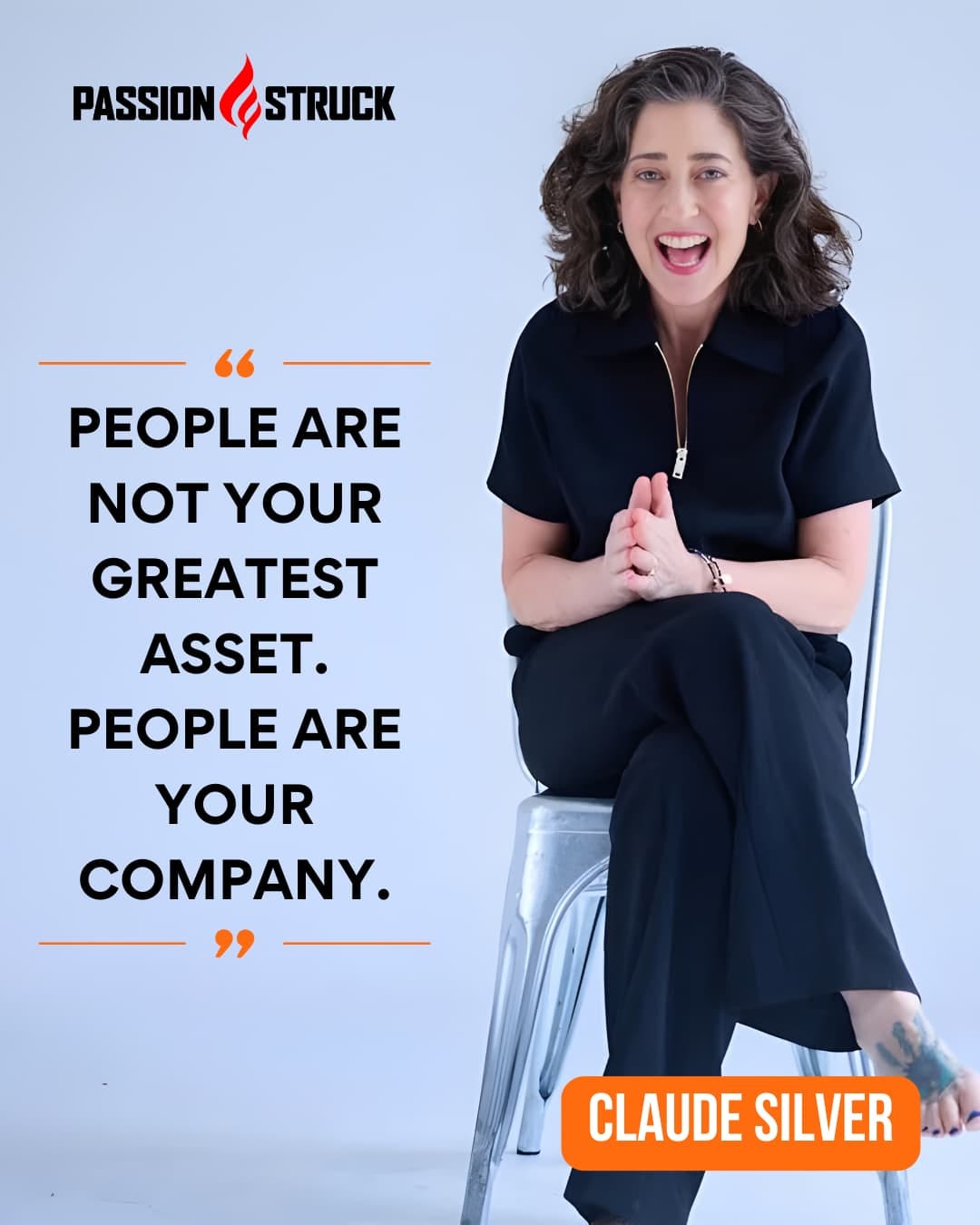
Claude Silver, Chief Heart Officer at VaynerMedia, believes organizations pay a significant price for that disconnection. As she told me,
“You can’t build a great company if people have to check their humanity at the door,” she told me.
And she’s got a point — one backed by both data and heart.
The most dangerous habit in business today is not incompetence. It is the quiet pressure to perform a version of yourself that feels acceptable, composed, and emotionally manageable to everyone around you.
Why We Pretend at Work
What makes that observation compelling is that it is not simply philosophical. Research from Stanford psychologists Priyanka Carr and Gregory Walton found that teams with high psychological safety consistently outperform teams where people fear embarrassment, punishment, or social risk. When people feel safe enough to contribute honestly, collaborate openly, and admit uncertainty, performance improves alongside trust.
That creates an uncomfortable tension inside many modern workplaces. Companies often say they want innovation, creativity, and initiative, yet unintentionally create cultures where people spend enormous energy managing perception instead of engaging fully. The result is not just burnout. It is fragmentation. People begin separating who they are from how they show up professionally, and sustaining that division over time becomes emotionally expensive.
The deeper question is not whether professionalism matters. It does. The real question is whether professionalism has become confused with emotional concealment. If belonging at work depends on constant self-editing, people may succeed externally while becoming increasingly disconnected internally.
So perhaps the more important leadership challenge is not getting people to perform better, but creating environments where they no longer feel compelled to hide so much of themselves in order to belong.
What It Means to Lead from the Heart
Claude Silver did not begin her career trying to redefine leadership. Like many people navigating ambitious, high-pressure environments, she initially focused on proving she belonged. She worked hard, delivered results, and learned how to operate inside cultures that often rewarded toughness, certainty, and relentless performance. But beneath that success was a growing exhaustion that came from constantly managing the gap between professionalism and authenticity.
Advertising, especially at the highest levels, can reward sharp instincts and emotional control while leaving very little room for vulnerability or humanity. Over time, Claude began questioning the cost of that dynamic. After years inside those environments, she found herself asking a deceptively simple question: what happens to people when they spend most of their professional lives performing versions of themselves that feel emotionally sustainable to others but psychologically unsustainable to themselves?
That question eventually led to a pivotal conversation with Gary Vaynerchuk
at VaynerMedia. Claude told him she no longer wanted to focus primarily on sales. She wanted to focus on the people doing the work — their emotional wellbeing, relationships, struggles, and growth. From that conversation emerged the role of Chief Heart Officer, a title that initially sounded unconventional in an industry built around metrics, competition, and scale.
What makes Claude’s work interesting is not the language of empathy itself, but the operational reality behind it. Her role is tied to retention, engagement, trust, communication, and long-term performance. She pays attention to the emotional atmosphere of the organization in the same way other executives monitor operational efficiency. In practice, that means listening carefully to what people are carrying beneath the surface of their performance.
What she discovered is something many organizations still underestimate: people rarely need more pressure than they are already placing on themselves. More often, they need environments where they can contribute honestly without feeling that their humanity is a professional liability. When people no longer spend so much energy protecting themselves emotionally, they tend to collaborate more openly, think more creatively, and remain more connected to the work they are doing.
The Science of Being Yourself at Work
Claude’s work touches something deeper than morale or company culture. It speaks to a fundamental human need: mattering. Neuroscientists have found that social exclusion activates many of the same neural pathways associated with physical pain. The body often experiences rejection not as an abstract emotional event, but as a threat. That matters because most workplaces underestimate how much energy people spend monitoring whether they are accepted, respected, safe, or one mistake away from exclusion.
Many organizations unintentionally reinforce this insecurity through subtle but persistent signals about who belongs and who does not. Professionalism becomes associated with emotional restraint, certainty, composure, and constant performance. People quickly learn which parts of themselves are welcome and which are safer to conceal. Over time, that adaptation becomes exhausting because maintaining a sense of belonging starts to require continuous self-editing.
Claude describes this as “the silent tax of conformity.” What makes that phrase powerful is that the cost is rarely visible in a spreadsheet. It appears in diminished creativity, reduced honesty, guarded communication, and the gradual loss of emotional investment in the work itself. When people feel they must protect themselves socially, they become more cautious, less curious, and less willing to risk failure, disagreement, or vulnerability.
Her approach to leadership is not built around sentimentality. It is rooted in the understanding that emotional safety changes how people think, collaborate, and contribute. When individuals feel respected beyond their utility or output, they tend to engage more fully and take more meaningful risks. Innovation depends less on pressure than many companies assume. More often, it depends on whether people feel safe enough to bring their full intelligence, perspective, and humanity into the room.
How to Lead from the Heart (Even If You’re Not a Boss)
You don’t need a title to lead with heart. Claude shares three habits anyone can adopt today:
Be emotionally brave.
When something feels off, name it. Vulnerability builds trust faster than silence ever will.Be emotionally optimistic.
Don’t deny pain — reframe it. Ask, “What’s this here to teach me?”Be emotionally efficient.
Don’t get stuck in the drama of conflict. Get curious instead.
These habits form the blueprint for authentic leadership. They remind us that people don’t follow titles—they follow trust.
When I asked her what she looks for in a great leader, Claude didn’t hesitate:
“Someone who listens with their eyes. Someone who knows that love is the greatest performance enhancer in the world.”
That might sound soft, but the data backs her up. Gallup’s research shows that employees who feel genuinely cared for are 3x more engaged, 40% less likely to burn out, and far more likely to stay.
Heart-led leadership doesn’t just feel good—it works.
What Happens When You’re Yourself
Being yourself at work feels risky—until you realize the real risk is pretending forever. Studies show that employees who feel forced to hide parts of themselves are 60% more likely to burn out and twice as likely to quit.
Claude’s message is simple: stop splitting yourself in two. Bring your humanity to work. When you do, you give others permission to do the same. And when people stop pretending, they start performing—not out of fear, but out of purpose.
What would change if you led one conversation this week with heart instead of habit?
Want to Lead (and Live) This Way?
For more, listen to my ad-free Passion Struck conversation with Claude Silver. It’s a powerful reminder that belonging isn’t built by policies—it’s built by presence.
Download the free companion Digital Workbook HERE!
One more thing: My upcoming children’s book, You Matter, Luma, is now available for pre-sale. It’s a story about kindness, courage, and the ripple effect of knowing you matter—lessons every adult at work could use, too.
When we lead from the heart, we don’t just change our jobs. We change each other.
Thoughts? Let me know below this essay!
Every 🧡, restack, or comment you share here on Substack
is like a signal flare…..
It helps this message find the person who is still walking
their own “schoolyard” alone.
Thank you for being part of this ecosystem.
I love turning these essays into a two-way conversation
So please let me know your thoughts below.
© John R. Miles 2026. All rights reserved.