

Escape the Known Hell
High-Achiever Burnout, Identity Loss & the 5-Second Fix


You kill the engine, but your thumb stays glued to the podcast button—just one more minute.
The front door looms twelve feet away, yet it might as well be a mile. Your phone glows with unread notifications, half-finished grocery lists, and the endless scroll of everyone else’s crises. On paper, you’re crushing it: Crisis Wrangler. Schedule Sorcerer. The one who keeps the plates spinning for the work, the kids, and the spouse.
But here in the dashboard’s blue hush, the truth lands like a gut punch: you’ve engineered a life you no longer live in.
Welcome to the Known Hell.
But here's what I discovered in my driveway: that twelve-foot gap isn't a canyon. It's a doorframe. And you have five seconds to walk through it.
The Safety of the Squeeze
Let’s be honest about why you’re still sitting in that driveway. It isn’t laziness. It isn’t weak willpower. You’re sitting there because your life—as relentless as it is—follows a script you’ve memorized.
You know exhaustion like a native language. You’ve perfected the triage: which email screams now, which child’s crisis is real, which deadline bends. There’s a twisted safety in that predictability.
When you’re running, you have a name: The Fixer. The one who holds it together.
Stillness has no name. That’s why it terrifies you.
The moment the engine dies, the to-do list quiets—and then the real noise starts. Does any of this matter? Am I just running in place? So you reach for your phone. One more email. One more scroll. Busyness becomes a wall between you and your partner’s eyes, between you and the weight of your children’s need for someone who is actually there.

The Identity Handcuffs
Gold stars for finishing early. “Student of the Month” for being dependable. From childhood, we learned that usefulness was love.
But usefulness is what you demand of a hammer. A wrench. When you anchor your worth to how much you produce for others, you’ve become inventory. You’ve confused being needed with being known.
The person everyone leans on is invisible.
We often assume our “self” is a fixed essence—that we are the same person in the boardroom as we are in the driveway. But as Stanford professor Brian Lowery argues, the “self” is actually a social construction. You aren’t just “you” by yourself; you are co-created by the people you interact with.
This is the deeper trap of the Known Hell: Identity isn't just who you are; it’s a group project.
Psychologists Dominic Packer and Jay Van Bavel point out that our shared identities fundamentally shape how we make decisions. If everyone in your life—your boss, your spouse, your kids—engages with you only as the “Fixer,” then that becomes the only "us" available. You aren't just playing a part; you are adhering to the "norms" of a group that only values your output.
To walk through that door as a human again, the “Super-Producer” has to die. You have to be willing to break the social contract of the "useful" tribe.
The Five-Second Threshold
Here’s where transformation actually happens: in the gap between knowing you should put the phone down and your hand actually moving. That hesitation isn’t weakness—it’s your identity fighting to stay in the familiar role, the one that feels safe.
This is where the 5-Second Rule enters. Counting down from five isn’t about willpower; it’s metacognition—a psychological hack that distracts you from fear and self-doubt long enough to act. Your brain will drag you back into “provider mode” if you think too long. The countdown short-circuits that loop.
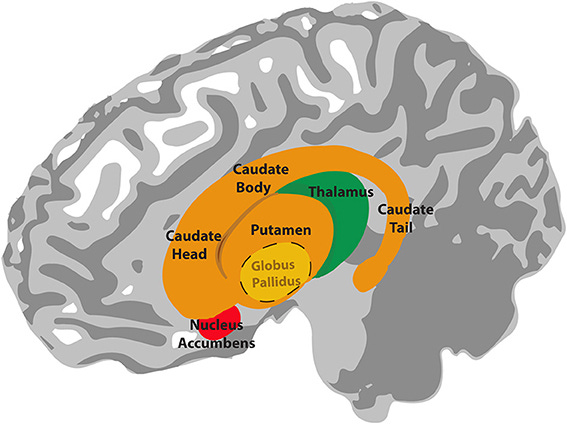
Don’t overhaul your entire life tonight. Instead, anchor one small ritual—a behavioral sequence so simple it becomes automatic. Research shows rituals activate the basal ganglia, the part of your brain that makes behaviors unconscious and effortless over time. Athletes don’t rely on motivation for free throws; they rely on pre-performance sequences. You need the same.
When you reach that front door tomorrow, do this:
Stop before the key turns. (Physical cue)
Touch the doorframe. (Sensory anchor—this creates a memorable boundary between “work-you” and “home-you”)
Take one deep breath—the kind that reminds you that you have a body, a presence, weight in the world. (Physiological reset)
In that single second, make the declaration: I am not walking in to provide. I am walking in to be here.
That identity recategorization is activating a dormant identity that already exists within you—” presence”—and giving it behavioral priority over “provider.”
Your identity beats behavior over time. If someone offered you a cigarette and your identity was “I’m a non-smoker,” you’d refuse without willpower. Same principle here: when your identity shifts to “I am present,” providing becomes optional rather than compulsory.
Repeat this ritual for five weeks—long enough for your brain to wire it as automatic. You’re not forcing change; you’re letting your brain do what it’s designed to do: adapt and rewire based on new patterns.
The door doesn’t open differently. Your relationship to crossing it does.
Stop Circling
Insight without action is just a softer version of paralysis. You can’t think through a wall; you have to step through it.
This crossing won’t be dramatic. It’ll happen in the quiet moment between the car and the door. It’s the instant you stop borrowing light from others’ approval and begin burning your own.
This is the hidden power of the threshold: If the “self” is co-created, then the moment you change how you show up, you force the world to see a different version of you.
When you stop acting like a tool, people have to start treating you like a human.
Brian Lowery’s research shows that we aren’t just “ourselves” in a vacuum; we are constructed by our interactions. When you stop acting like a tool, people have to start treating you like a human. Furthermore, as Packer and Van Bavel argue, these identities aren’t hardwired or immutable. You have the power to choose which “us” you belong to.
By touching that doorframe and choosing presence over utility, you are initiating a “dissent” from the old group identity. You aren’t just changing your own life; you are rewriting the social contract for everyone who touches you. Cross that threshold once, and you’ll see: the wall was never solid. It was just a story you were too exhausted to question.
Go Deeper: For this episode, I’ve put together a companion Significance Audit. It’s designed to help you see exactly where your energy is being degraded and how to start pulling up the anchor.
Listen to the full episode.
Which part of your “Internal Script” has been holding you back?
What’s one small way you’ll prioritize agency over optimization this week?
The driveway image is one of the most honest descriptions of modern exhaustion I've read. And the identity handcuffs observation is precise — when usefulness becomes worth, you become inventory. The threshold ritual points at the right gap. What's hard to convey in five steps is that presence isn't something a ritual produces — it's what's already there when the mental running stops. The doorframe touch can create a pause. What fills the pause determines everything. For most people, the pause fills immediately with the next thing. Not because they don't want to be present, but because nobody has ever shown them what presence actually feels like from the inside — which is different from knowing the word.
This feels powerful because it takes something ordinary — sitting in the driveway for one more minute — and reveals the whole emotional architecture underneath it.
The hopeful part is that the piece does not ask for a dramatic escape, only for one repeated act of returning to yourself with enough consistency that a different life can slowly take shape...