

The 7-Word Text That Saves Men’s Lives
One message. One coffee. One life reclaimed.


He’s been sitting in his car for eleven minutes.
The engine is humming, the keys are in his palm, and his gym bag is slumped in the back seat like a passenger who gave up. He isn’t tired. He isn’t lazy. He is simply experiencing a specific kind of internal gravity, a silence so heavy it feels like a physical weight on his chest.
In the language of the nervous system, he is “bracing.” He is stuck in the buffer zone between the performance of his day and the isolation of his head. For a man in this state, the distance between the car seat and the front door can feel like a mile of broken glass.
We often think that saving a life requires a grand intervention, a clinical breakthrough, or a dramatic late-night rescue. But the “social physics” of mattering tells a different story. Sometimes, the most powerful tool for restoration is just seven words on a glowing screen.
The Stat That Should Terrify You
There is a statistic that should haunt us: One in seven men has zero close friends. Not “a few” or “some.” None. This isn’t a personality trait; it’s a systemic collapse. We have built a world that recruits men for their utility, their ability to provide, to protect, to “hold the line,” while simultaneously dismantling the environments where they are seen as people.
When you have no one to call at 2 a.m., it isn’t just a “loneliness problem.” It is a biological threat. Research by Julianne Holt-Lunstad famously noted that chronic isolation is as lethal as smoking fifteen cigarettes a day. Why? Because the human brain is wired to view “aloneness” as “unsafe.” When we are isolated, our cortisol spikes, our resilience thins, and we transition from being a “sensing human” to a “bracing resource.”
The Architecture of the Reach
Dr. Zac Seidler, the Global Director of Research at Movember, understands this not just as a researcher, but as a son who lost his father to suicide. His work suggests that men aren’t “broken” or “emotionally stunted.” They are simply trapped in a legacy habit loop: Stress → Suppress → Isolate.
To change the outcome, we have to change the loop.
In studies on prosocial intervention, researchers found a striking “mattering effect.” Men were asked to perform one small, intentional act of outreach a week, one text, one coffee, one “how are you, really?”
The data was undeniable. Those who engaged in this simple “connection habit” saw a 24% increase in life satisfaction in just one month. Their stress hormones dropped. Their sense of agency returned.
You do not rise to the level of your grit; you fall to the level of your systems. If your system is built on “solo grit,” you will eventually deplete. But if your system is built on Reciprocal Mattering, you create a loop that replenishes itself.
The Original Edge
We have been sold a version of masculinity that treats vulnerability as a defect. But the physics of high-trust teams tells us otherwise. Vulnerability isn’t the “weakness” in the bridge; it is the tension that allows the bridge to hold weight. Friendship isn’t a luxury or a distraction from “real work.” It is the oxygen that keeps the “Person” alive inside the “Resource.”
The man in the car doesn’t need a lecture on “manliness.” He needs a signal. He needs to know that his presence affects the room temperature. He needs to remember that he is a cause, not just an effect.
Belonging begins with a single, trivial-feeling act. Send the text. Buy the coffee. Please hold the line for someone else, so they can remember how to hold it for themselves.
The Experiment That Proves It: In prosocial intervention studies, men assigned weekly “mattering moments” (like intentional outreach) saw measurable shifts.
Group A: Sent one text + grabbed one coffee per week.
Group B: Solo reflection (journaling alone).
Data can feel cold, but here, it’s proof that warmth heals.
Results (from World Happiness Report synthesis, 2019; n=1,200+ participants):
+24% life satisfaction for the connection group in just 4 weeks.
Loneliness dropped 18%.
Cortisol (stress) levels fell by 15%.
Connection > Reflection. Every. Single. Time.
Vulnerability isn’t weakness, it’s the original edge. Data from high-trust teams shows it boosts resilience 20-30% more than solo grit.
We’re not wired for isolation.
Friendship isn’t optional.
It’s oxygen for the soul.
Reply: What’s YOUR Score?
Take the 60-Second “Mattering Quiz”
Pick one emoji per line — takes 15 seconds.
How many people know what keeps you up at night?
→ 3+ 😊 | 1–2 😐 | 0 😔Last time you said, “I need help”?
→ This week ✅ | This year ⚠️ | Never 🚨Last time someone checked on you — just because?
→ This week 🔥 | This month ⚡ | Never 💔
Instant Score
Emoji Points
😊 ✅ 🔥 3 points
😐 ⚠️ ⚡ 2 points
😔 🚨 💔 1 point
Your Total (0–9):
7–9 → You matter. Pay it Forward
4–6 → Send the 7-word text TODAY.
0–3 → Reply “NEED THIS” — I’ll DM you first.
Drop your 3 emojis + total in the comments.
Example: 😔 🚨 💔 → 3
First 25 replies → personal tip
Top 5 sharers → free ‘I MATTER’ shirt’
First 10 “NEED THIS” → 1-on-1 note from me
Let’s turn comments into lifelines.
The 7-Word Text (Copy-Paste Now)
Let’s make this real for you.
Ready to take one micro-step that could save a life?
“Hey man, been thinking of you. Coffee this week?”Rules:
Send today.
No agenda.
If no reply — send again next week.
Persistence = proof you care.
SHARE THIS
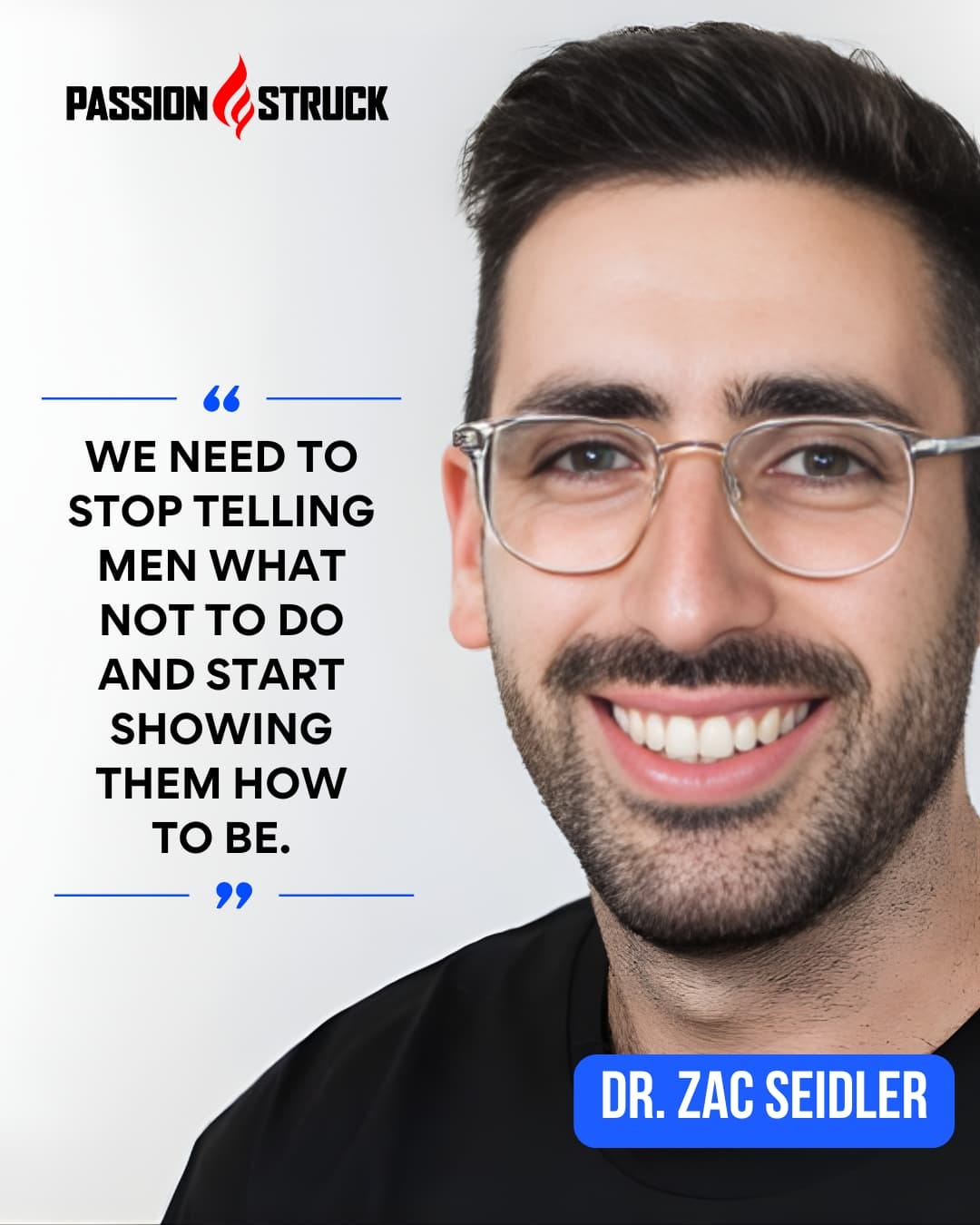
“Men don’t need therapy. They need one person who won’t let them disappear.” — Dr. Zac Seidler
(Save. Share. Tag a brother.)
For Premium Members
If you are reading the full edition, thank you for supporting this work. Your membership gives you access to:
ad-free 60-min audio
Mattering Workbook (8 prompts + tracker)
Private community (weekly coffee match-ups)
Full archive ($100s in tools)
The purpose of these Premium Editions is not simply to listen, but to integrate.
To take what we talk about on the show and make it something you can live with, work with, and return to.
Final Move
Text sent? Drop his first name + your city below.
Let’s start a chain.
Because no one was meant to disappear in plain sight.
Stop isolating. Start mattering.
Listen to the full Ad-free conversation below:
Wow I could not agree more with reaching out and asking to visit for coffee. The NUMBER 1 cause of any mental distress in my therapy practice for men is loneliness. It exasperates any predisposed underlying condition and is really difficult to overcome. Thanks for writing this -- I'm gonna share it on my page.
I can't remember the last time a man called me and invited me out for coffee. If given the opportunity, I'll talk the legs off strangers.